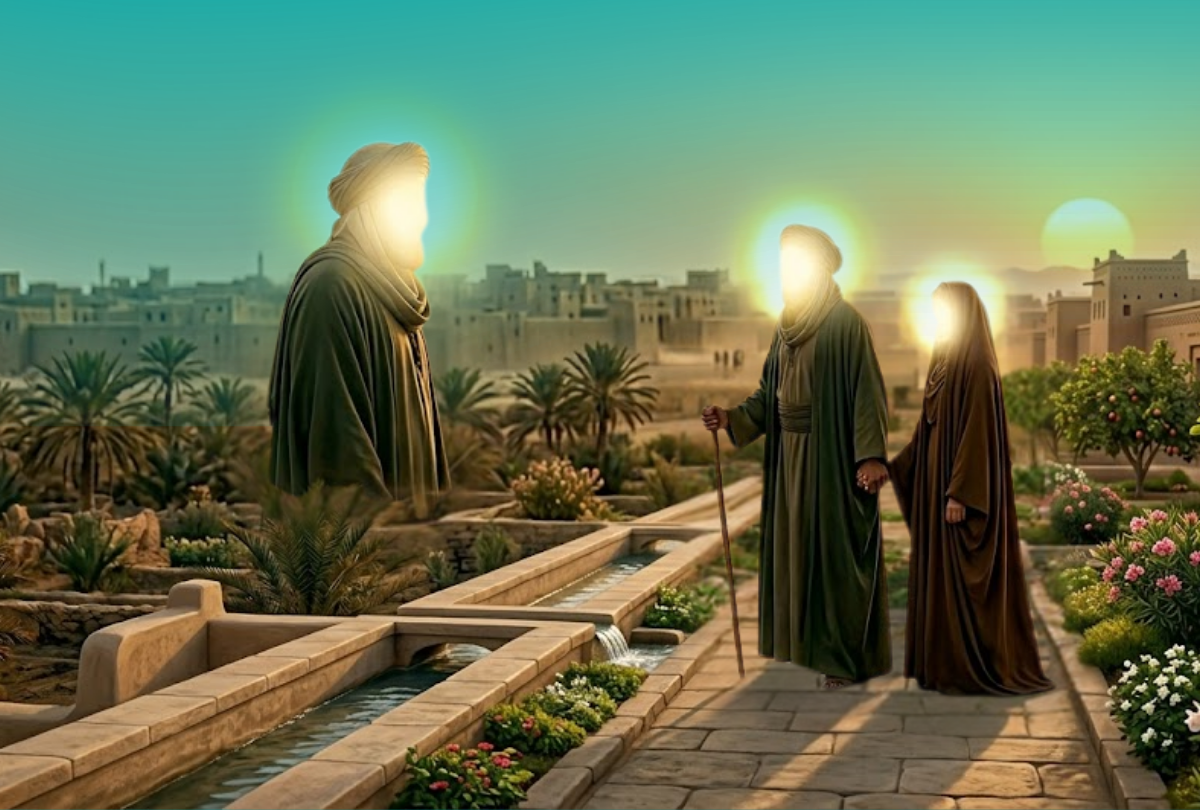
The Land of Fadak: A Gift From the Prophet (saww) to His Daughter (sa)
Certain moments in Islamic history continue to speak across generations.
They reveal the mercy, wisdom, and care found within the household of Prophet Muhammad (saww), while offering lessons about truth, justice, and faithfulness to Allah’s (swt) commands.
The story of Fadak is one of those defining moments.
To understand why this land holds such significance, we must first reflect on the special bond between Prophet Muhammad (saww) and his beloved daughter, Sayyida Fatima al-Zahra (sa)
Prophet Muhammad (saww) is reported to have said:
“Fatima (sa) is a part of me; whoever pleases her, pleases me, and whoever displeases her, displeases me. She is dearer to me than all beings.”
Al-Amali of Shaykh Mufid, a.31, h.2
This narration reveals her elevated status and helps us understand why the gift of Fadak was far more than a transfer of property.
It was a reflection of divine wisdom and prophetic honor.
What was the Land of Fadak?
This meant it was placed under the direct authority of the Prophet (saww) to allocate according to Allah’s (swt) command.
Its value extended beyond material wealth.
Fadak represented a sustainable source of support that could be used for charitable service and the welfare of the Ahlulbayt (as).
Why Did the Prophet (saww) Gift Fadak to Lady Fatima (sa)?
The gifting of Fadak was rooted in Quranic revelation.
Allah (swt) states:
“Give to the relative his dues (from the charity)…”
Surah Al-Isra, Ayah 26
According to narrations, when this verse was revealed, Prophet Muhammad (saww) asked Jibraeel (as) about its meaning.
Through divine instruction, he was told to grant Fadak to Lady Fatima (sa).
This made Fadak a divinely guided gift during the Prophet’s (saww) lifetime.
The gift served as both recognition of her honored position and a means of financial independence for her and her family.
It ensured that its resources could continue serving those in need and support causes of benefit to the wider community.
How Sayyida Fatima (sa) Used Fadak
Historical narrations describe Sayyida Fatima (sa) overseeing Fadak through appointed agents.
Its revenue was not used for personal comfort or worldly excess.
Instead, it was used to care for the poor, assist the vulnerable, and provide relief to those facing hardship.
Fadak became a living example of how blessings should be used in the path of Allah (swt).
What Happened After the Prophet’s (saww) Passing?
After Prophet Muhammad (saww) passed away, control of Fadak was taken away.
Sayyida Fatima (sa) asserted that it had been gifted to her during the Prophet’s (saww) lifetime and was therefore not an issue of inheritance.
Although she presented her claim and testimony, it was denied.
This event became one of the most discussed episodes in early Islamic history because it raised important questions surrounding justice, testimony, and the treatment of Ahlulbayt (as).
What Fadak Represents
For Shia Muslims, the issue of Fadak represents much more than the loss of land.
It symbolizes a broader struggle concerning truth, justice, and the rightful recognition of the family of Prophet Muhammad (saww).
The dispute remains significant because it reflects the trials faced by Lady Fatima (sa) and highlights the challenges that followed the Prophet’s (saww) passing.
It continues to stand as a reminder that truth must be upheld even when it is challenged.
Lessons from the Legacy of Fadak
The story of Fadak offers timeless lessons for believers.
It teaches that justice is inseparable from faith, and that honoring those whom Allah (swt) has honored is part of sincere devotion.
Remembering Fadak means remembering the status of Sayyida Fatima (sa), the trust placed upon believers to uphold truth, and the enduring example of Ahlulbayt (as).
Its legacy continues to inspire Muslims to remain steadfast, uphold dignity, and stay committed to divine guidance.
Frequently Asked Questions
Fadak was a fertile oasis near Khaybar that came under the authority of Prophet Muhammad (saww) and was later gifted to Sayyida Fatima (sa).
According to narrations, it was gifted through divine instruction after the revelation of Quran 17:26.
No. Shia historical sources explain that Fadak was granted to Sayyida Fatima (sa) during the Prophet’s (saww) lifetime, making it a gift rather than inheritance.
It remains a lasting symbol of justice, truth, and the rights of Ahlulbayt (as).
The story teaches believers about justice, faithfulness to divine commands, serving others, and recognizing the honored status of Sayyida Fatima (sa).