What would the world look like if everyone gave a little?
In a world often shaped by individual ambition and personal gain, it can be easy to overlook the quiet power of giving.
Many people imagine that changing society requires large-scale solutions, substantial wealth, or extraordinary sacrifice.
Yet both Islamic teachings and modern research suggest something much simpler.
Meaningful change often begins with small, sincere acts carried out consistently.
A kind word. A helping hand. A small donation. A moment of patience.
These gestures may seem insignificant on their own, but when multiplied across a global community, their impact can be transformative.
The Quran repeatedly reminds us that no sincere act of giving is ever wasted.
What appears small to us may carry immeasurable weight with Allah (swt), and its effects often reach further than we realise.
So what would the world truly look like if everyone gave a little?
A world changed by small acts
The answer begins with one of the most powerful Quranic examples of generosity and multiplication:
The Quran gives us this beautiful example:
“The parable of those who spend their wealth in the way of Allah (swt) is as the parable of a grain growing seven ears, in every ear, there are a hundred grains; and Allah (swt) multiplies for whom He pleases; Allah (swt) is Ample-giving, All-knowing.”
Surah Baqarah, Verse 261
This verse reminds us that giving creates effects far beyond what we can immediately measure.
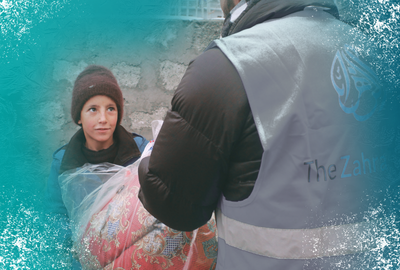
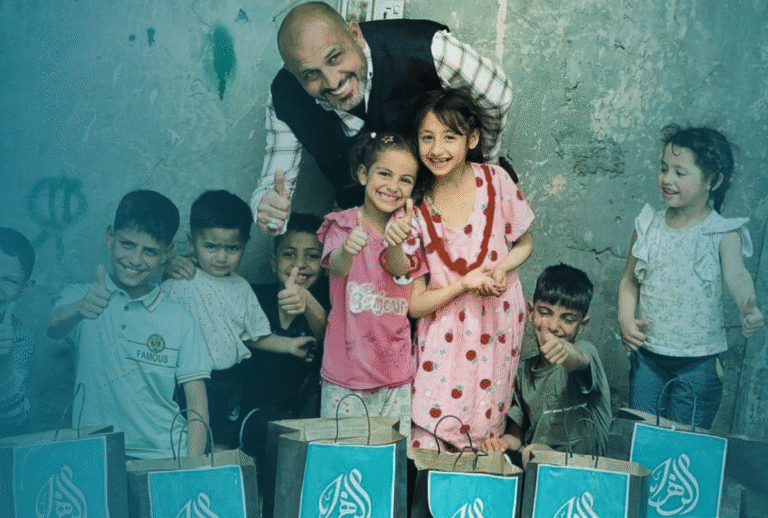
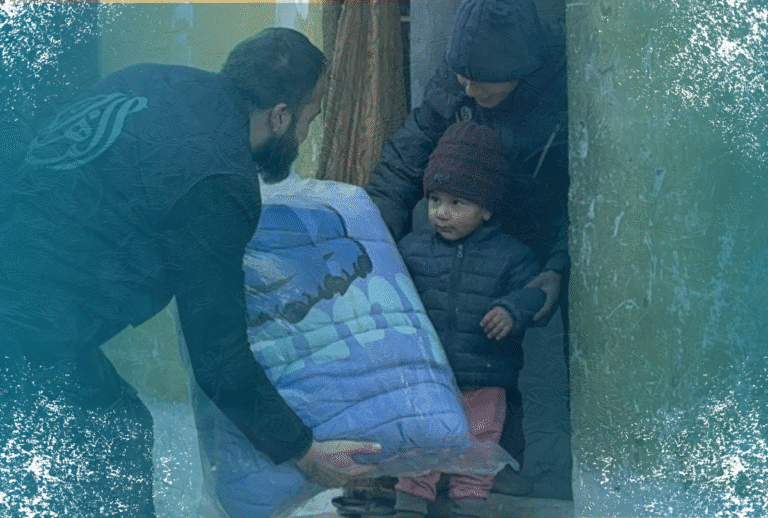
One act of kindness often inspires another. One donation can ease hardship for an entire family. One sincere gesture can restore hope.
This is reflected in modern research.
Change often begins quietly.
It begins when someone chooses to give.
Giving means more than wealth
Many people hear the word charity and immediately think of money.
But Islam teaches that generosity takes many forms.
Helping someone through difficulty, offering emotional support, sharing time, and showing compassion are all acts of charity.
Imam Musa al-Kadhim (as) is reported to have said:
“Your assistance of the weak is one of the best forms of charity.”
Tuhaf al-Uqul, p.414
This expands the meaning of giving.
It reminds us that every person has the ability to contribute, regardless of financial circumstances.
Sometimes what people need most is not material support, but care, encouragement, and presence.
Why small contributions matter
A common reason people hesitate to give is the belief that their contribution is too small to matter.
Islam challenges this mindset directly.
Imam Ali (as) is reported to have said:
“Do not feel ashamed for giving little because refusal is smaller than that.”
Nahjul Balagha, h.67
This teaching shifts attention away from quantity and toward sincerity.
The Quran reinforces this principle:
“You shall never attain (the perfect standard of) righteousness until you spend (in charity) from (the wealth) that you love; and whatever you spend, Allah (swt) surely knows it.”
Surah Ale Imran, Verse 92
The value of giving lies not in its size, but in the sacrifice and sincerity behind it.
What may seem small can have profound consequences.
Giving changes the giver
Generosity shapes not only the person receiving help, but also the person giving.
Prophet Muhammad (saww) is reported to have said:
“Allah (swt) has made generosity the greatest moral virtue.”
Kanz al-Ummal, n.15926
This highlights the transformative nature of giving.
Acts of generosity build empathy, strengthen gratitude, and nurture humility.
Giving is not simply an action.
It is a process of personal refinement.
A more compassionate society
When generosity becomes part of daily life, society itself begins to change.
Communities become stronger.
Families become more connected.
People become more willing to support one another.
The Quran says:
“Those who spend their wealth by night and by day, secretly and openly, for them is their reward with their Lord, and they shall have no fear, nor shall they grieve.”
Surah Baqarah, Verse 274
This verse emphasizes consistency.
Giving has its greatest impact when it becomes a regular habit.
Imagine what could happen if this became part of everyday life.
The blessing hidden within
Islam teaches that generosity carries blessings beyond what we can immediately see.
Imam Ali (as) is reported to have said:
“Attract sustenance by giving charity.”
Bihar al-Anwar, v.78, p.68, n.13
This reflects a broader understanding of provision.
Sometimes generosity returns through peace of mind, opportunity, support, or unexpected ease.
What we give often returns in ways we never anticipated.
What if everyone gave a little?
The world would not become perfect overnight.
But it would become more compassionate.
There would be less isolation.
Greater trust.
Stronger communities.
More dignity for those facing hardship.
Many social challenges continue because people underestimate the value of small action.
Yet transformation often begins with ordinary people choosing to act with sincerity.
A little, given consistently, can create change far beyond what we imagine.
Final reflections
The world does not always need dramatic solutions.
Often, it needs people who are simply willing to give what they can.
Every sincere act of generosity has the power to create change.
Give today through charity, service, or acts of kindness, and help build a more compassionate world for everyone.