Eid al-Adha: More than a celebration
For many Muslims, Eid al-Adha is recognised as a time of joy, prayer, and togetherness.
Yet within our faith, it carries a meaning that reaches far beyond festivity.
It is a day of devotion, reflection, and sincere submission to Allah (swt).
The Prophet (saww) is reported to have said:
“Adorn your festivals (i.e. Eid) with frequent chants of Allahu Akbar (Allah is the Greatest).”
Kanz al-Ummal, n.24094
This reminds us that Eid is not merely a social occasion.
It is a moment to centre the heart on remembrance and gratitude.
Eid al-Adha invites believers to reflect on sacrifice, obedience, and the responsibilities we carry towards others.
The true meaning of sacrifice
At the heart of Eid al-Adha lies the example of Prophet Ibrahim (as), whose willingness to obey Allah (swt) showed complete submission and trust.
The Quran reminds believers:
“Never will the (animals’) flesh or their blood reach Allah (swt); however, what reaches Him from you is piety…”
Surah Al-Hajj, Ayah 37
This verse captures the essence of the day.
The outward act of sacrifice matters, but its true value lies in sincerity.
Eid al-Adha asks each believer to consider what must be sacrificed inwardly.
Pride, attachment, selfishness, and worldly distractions are often the deeper offerings that draw us closer to Allah (swt).
A day of worship and reflection
Eid al-Adha is also a sacred opportunity for worship through recommended acts such as ghusl, Eid prayer, supplication, and remembrance.
Its connection to Hajj gives it even greater spiritual significance.
Imam al-Baqir (as) is reported to have said:
“Pilgrimage (Hajj) calms the hearts.”
Amali al-Tusi, p.296, h.n.582
This calmness reflects the spiritual purpose of Eid itself.
It is a day that encourages believers to pause, reflect, and renew their relationship with Allah (swt).
For many, it is also a time to engage in remembrance and reflect upon the lessons of steadfastness taught by the Ahlulbayt (as).
Worship through generosity
Eid al-Adha teaches that worship should always extend beyond the self.
The Prophet (saww) is reported to have said:
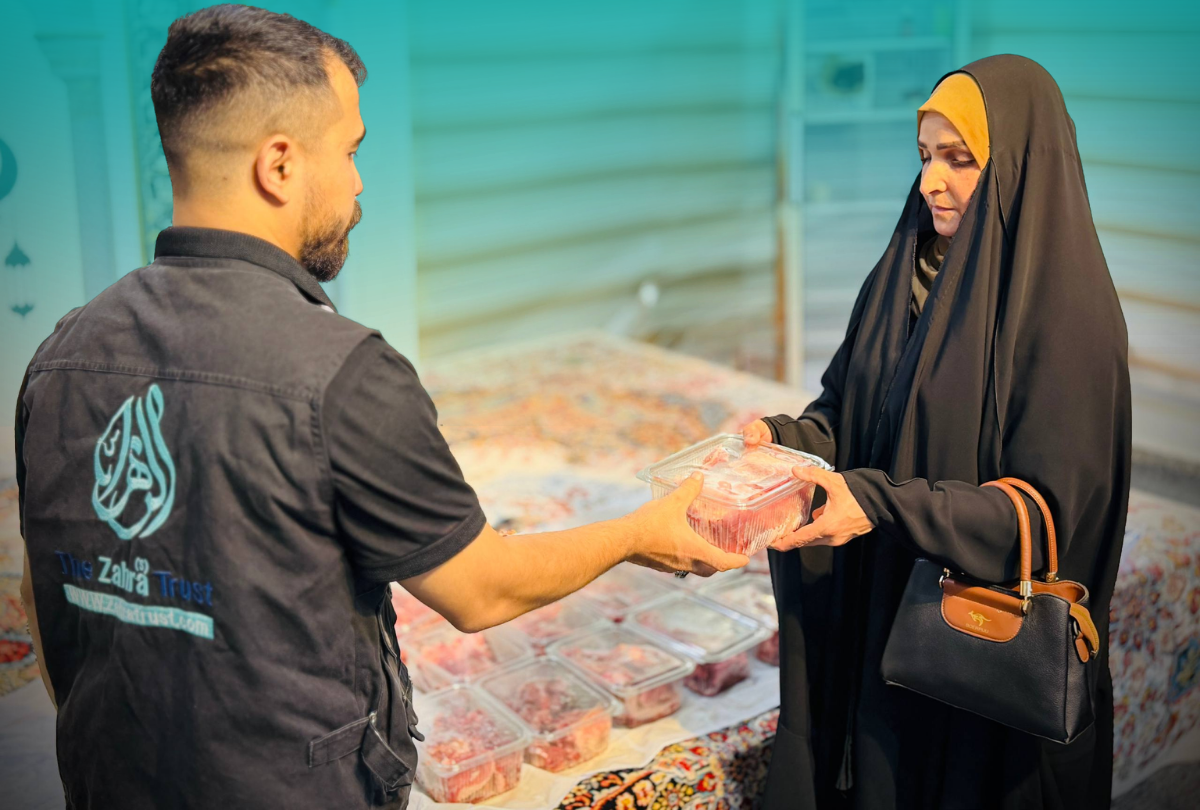
“Allah (swt) has established this Udhiyah so that your poor may eat meat, so feed them.”
Wasail al-Shiah, v.14, s.3, ch.14, h.18989
This teaching places generosity at the centre of the occasion.
Sharing food, supporting families in need, and strengthening bonds within the global community transform private worship into collective mercy.
Celebration becomes most meaningful when its blessings are shared.
Why it still matters today
In modern life, sacrifice often means giving up convenience for purpose.
Eid al-Adha challenges us to ask what we are willing to surrender for Allah (swt).
It reminds us that faith is measured not simply by ritual observance, but by sincerity, service, and transformation.
More than a celebration, it is a yearly invitation to renew our intentions and live with greater consciousness.
Give with purpose this Dhul Hijjah
Eid al-Adha reminds us that sacrifice is not only about what we offer, but about the impact our giving creates in the lives of others.
The spirit of this blessed season calls believers to turn devotion into action through compassion, generosity, and care for those facing hardship.
During Dhul Hijjah, every act of giving becomes an opportunity to extend relief, restore dignity, and support vulnerable families in meaningful ways.
By giving during these sacred days, we honour the deeper lessons of sacrifice taught through Prophet Ibrahim (as): sincerity, trust in Allah (swt), and service to others.
This Dhul Hijjah, let your generosity become a source of hope.
Support those in need and allow your giving to bring comfort, dignity, and lasting relief to families who need it most.
Frequently asked questions
It commemorates Prophet Ibrahim’s (as) obedience to Allah (swt) while emphasising sacrifice, devotion, reflection, and charitable action.
It represents surrendering personal attachments and prioritizing devotion to Allah (swt).
Recommended acts include ghusl, Eid prayer, Qurbani for those able, supplication, and remembrance.
Sharing Qurbani ensures that vulnerable families can also experience the blessings and joy of Eid.
Eid al-Adha coincides with the culmination of Hajj and reflects the same spirit of submission and devotion.
Because it calls believers towards inner transformation, sincere worship, and responsibility towards others.