
Who was Lady Fatima al-Aleela (sa)? History, tradition and scholarly perspectives
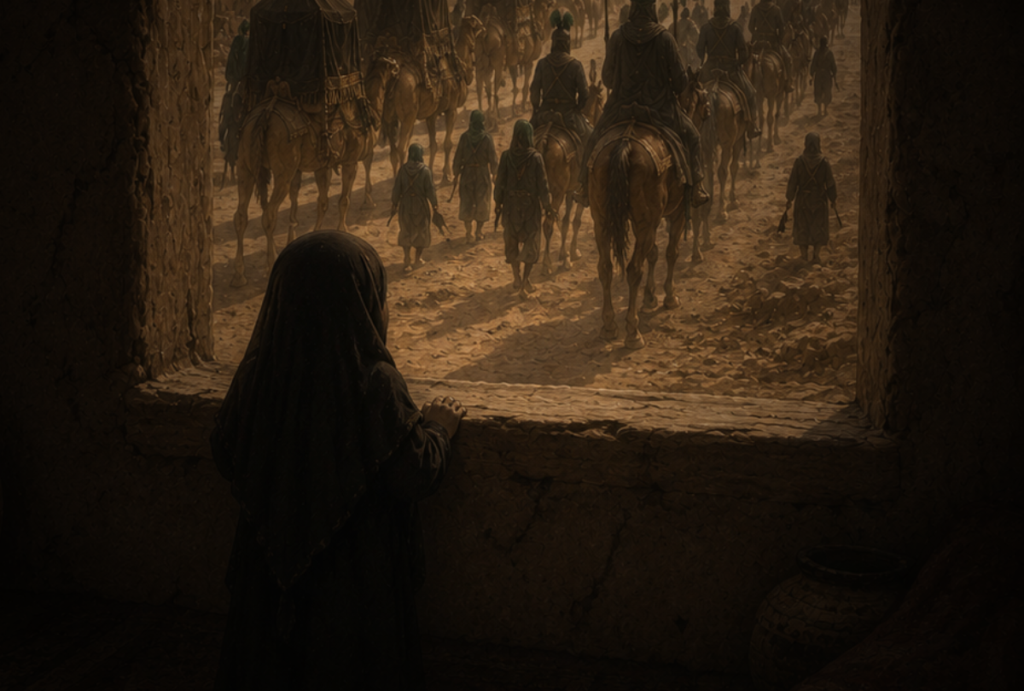
For many people exploring the history of Karbala and the family of Imam Hussain (as), one question often arises: who was Lady Fatima al-Aleela (sa)? In many Shia traditions, Lady Fatima al-Aleela (sa) is remembered as a daughter of Imam Hussain (as) who remained behind in Medina due to illness while her father and family journeyed toward Karbala.
Her story has been retold in sermons, educational programs, and devotional gatherings for generations. Yet when historians compare the earliest records with later accounts, they find differing levels of detail regarding her identity. As a result, Lady Fatima al-Aleela (sa) occupies a unique place where religious tradition and historical inquiry intersect.
Understanding her story requires examining both the devotional narratives that preserved her memory and the historical sources that continue to shape scholarly discussions today.
What does the title “al-Aleela” mean?
The title “al-Aleela” literally means “the ill” or “the sick.” Rather than functioning as a traditional personal name, it serves as a descriptive label connected to a specific narrative.
According to later reports, a daughter of Imam Hussain (as) was suffering from illness around the time he departed from Medina. Because she was reportedly unable to travel, she remained behind while the rest of the family continued their journey.
This detail is important because many scholars believe that “al-Aleela” developed as a descriptive title attached to an existing historical figure rather than representing a completely separate individual.
Lady Fatima al-Sughra (sa) and Lady Fatima al-Aleela (sa)
The title “al-Sughra” means “the younger.” Such designations were commonly used in Arab families to distinguish between relatives who shared the same name.
Under this interpretation:
- Lady Fatima al-Sughra (sa) was one of the daughters of Imam Hussain (as).
- She was reportedly unable to accompany the family due to illness.
- The title “al-Aleela” became associated with her condition.
- Later generations referred to her using both names.
This explanation has become the most familiar understanding in many religious communities and educational discussions about Karbala.
What do the earliest historical sources say?
When researchers turn to the earliest available historical works, they encounter a more limited body of evidence.
One of the most significant early Shia scholars, Shaykh al-Mufid, discusses the family of Imam Hussain (as) in “Kitab al-Irshad.” His work identifies daughters named Fatima and Sakina but does not clearly mention a separate daughter known specifically as Lady Fatima al-Aleela (sa).
Because “Kitab al-Irshad” is regarded as one of the foundational biographical works concerning the Imams, historians often use it as an important reference point when evaluating later traditions.
This has led some scholars to conclude that while the tradition of Lady Fatima al-Aleela (sa) became well known over time, the earliest surviving sources do not definitively establish her as a distinct historical figure.
The narrative of the daughter left in Medina
The most widely circulated account concerning Lady Fatima al-Aleela (sa) describes a daughter of Imam Hussain (as) who stayed in Medina because of illness.
According to these narrations, she was unable to accompany her father on the journey that ultimately led to Karbala. After the tragedy of Ashura, she is said to have experienced deep sorrow upon learning of the martyrdom of Imam Hussain (as).
The story gained broader recognition through later historical and devotional works, including reports found in “Maqtal al-Hussain” by al-Kharazmi. Over time, the narrative became integrated into commemorative traditions that focus on the sacrifices and hardships endured by the family of the Prophet Muhammad (saww).
These accounts continue to hold emotional significance for many believers who reflect upon the human dimensions of the events of Karbala.
Why do scholars disagree?
The discussion surrounding Lady Fatima al-Aleela (sa) is rooted primarily in the study of historical sources.
Many scholars who accept the traditional account argue that later narrations preserved authentic details transmitted through generations of believers. In their view, not every historical memory was necessarily recorded in the earliest surviving texts.
Other researchers place greater emphasis on source chronology. They note that references to Lady Fatima al-Aleela (sa) become more visible in later literature and are not clearly documented in the earliest records.
Several factors contribute to the differing viewpoints:
- The limited detail found in early historical works.
- Variations between narrations.
- Questions regarding transmission and documentation.
- The expansion of devotional literature over time.
These factors explain why the topic continues to generate discussion among scholars and students of Islamic history.
Loyalty through the example of the Ahlulbayt (as)
The discussion about Lady Fatima al-Aleela (sa) also highlights a broader lesson from the legacy of the Ahlulbayt (as): preserving history is itself an act of loyalty and responsibility.
Throughout the centuries, scholars dedicated themselves to documenting the lives of the Prophet’s family and preserving accounts connected to Karbala. Their efforts ensured that future generations could continue learning about these events while also evaluating the evidence behind various narrations.
Prominent scholars such as Shaykh al-Mufid, al-Sharif al-Murtada, and Shaykh al-Tusi helped establish a tradition of scholarship that balanced devotion with intellectual rigor. Their works encouraged careful analysis rather than unquestioning acceptance.
The conversation surrounding Lady Fatima al-Aleela (sa) reflects this approach. Some scholars accepted later reports as reliable historical memories, while others examined the available evidence more critically. Both perspectives emerged from a sincere desire to understand and preserve the legacy of Imam Hussain (as).
For modern readers, this serves as a reminder that honoring the Ahlulbayt (as) involves both love and learning. Preserving their history requires thoughtful engagement with sources and an appreciation for the scholarly tradition that has safeguarded their legacy for centuries.
What can we say with confidence?
Although some questions remain open to interpretation, several points are broadly acknowledged.
Lady Fatima al-Aleela (sa) is widely recognized in later devotional literature as a daughter of Imam Hussain (as).
Many narrations identify her with Lady Fatima al-Sughra (sa) rather than describing her as a separate person.
The title “al-Aleela” is generally understood to mean “the ill” or “the sick.”
The earliest historical works do not clearly establish a distinct daughter known specifically by that title.
Together, these observations help explain both the popularity of the tradition and the continuing scholarly discussion surrounding it.
Final reflections
So, who was Lady Fatima al-Aleela (sa)?
According to many later Shia traditions, Lady Fatima al-Aleela (sa) was a daughter of Imam Hussain (as), commonly identified with Lady Fatima al-Sughra (sa), who remained in Medina due to illness while the events of Karbala unfolded.
Her story became an enduring part of devotional remembrance and continues to be shared in discussions about the family of Imam Hussain (as). At the same time, historians continue to evaluate the available evidence and compare early sources with later narrations.
What remains undisputed is the profound impact that the tragedy of Karbala had on the family of Imam Hussain (as) and the lasting place that these narratives occupy within Islamic memory.
Let your remembrance continue beyond Muharram. Support widows and orphans, and help create lasting change inspired by the legacy of Aba Abdillah (as). Give beyond the season; build ongoing reward and impact.
Frequently asked questions
Many later Shia sources identify Lady Fatima al-Aleela (sa) as a daughter of Imam Hussain (as), although historians continue to examine how clearly this can be verified through early historical records.
According to many traditional accounts, yes. Lady Fatima al-Aleela (sa) is often understood to be Lady Fatima al-Sughra (sa), with the title “al-Aleela” referring to her reported illness.
The word means “the ill” or “the sick” and is generally treated as a descriptive title rather than a personal name.
The debate arises because later devotional sources provide details that are not always clearly found in the earliest surviving historical works.
Discussions about her often reference early works such as Shaykh al-Mufid’s “Kitab al-Irshad” alongside later texts, including al-Kharazmi’s “Maqtal al-Hussain,” where related traditions appear in greater detail.
More from Blog

What’s Inside a Sponsored Classroom?
When most people picture a classroom, they think of desks, books, and a teacher leading a lesson. For a child facing poverty,…
Imam Hasan al-Askari (as): Preparing the next generation
The Wiladat of Imam Hasan al-Askari (as) offers believers an opportunity to reflect on the life of the eleventh Imam of the…
Knowledge as Sadaqah Jariyah: Why supporting education is a lasting legacy
Every believer hopes to leave behind a legacy that continues to earn the pleasure of Allah (swt). While many acts of charity…