A lasting legacy is often misunderstood as something tied to wealth, fame, or achievements. In Islamic teaching, however, a legacy is defined by something far deeper: the impact a person leaves behind in the hearts and lives of others.
It is the continuation of goodness after a person has returned to Allah (swt). It is the ripple effect of faith-driven actions that continue to benefit people long after one’s lifetime. From the perspective of the teachings of the Ahlulbayt (as), a legacy is not static. It is living, expanding, and ongoing.
The Quran beautifully captures this idea:
This verse highlights that sincere giving is never lost. Instead, it becomes a protected and lasting reward with Allah (swt), forming the foundation of a lasting legacy.
The Quranic foundation of a lasting legacy
The Quran reframes how believers understand success. It is not measured by accumulation but by contribution. What you give for the sake of Allah (swt) becomes part of your eternal record.
In this sense, a lasting legacy is rooted in generosity that continues to benefit others. Verse 274 of Surah al-Baqarah reminds believers that giving is not limited to a moment in time. It creates a continuous relationship between the giver, the act, and the reward preserved by Allah (swt).
This shifts the believer’s mindset from short-term impact to long-term benefit. Instead of asking what can be gained now, the question becomes: what will continue to benefit others after I am gone?
Legacy through impact and intention
A lasting legacy is not only built through major actions but through consistent character. It is formed in the way a person treats others, the values they uphold, and the sincerity behind their intentions.
Imam al-Sadiq (as) is reported to have said:
Bihar al-Anwar, v.5, p.140, n.7
This narration highlights that human life is deeply connected to moral behaviour. Goodness brings meaning and continuation, while wrongdoing diminishes the value of one’s time on earth.
A legacy, therefore, is not something that happens by chance. It is built intentionally through kindness, service, and integrity.
Ongoing reward and sadaqah jariyah
One of the most important concepts in understanding a lasting legacy in Islam is ongoing reward, known as Sadaqah Jariyah. This is reward that continues even after death.
Imam al-Sadiq (as) is reported to have said:
Al-Kafi, v.7, ch.36, n.193
This hadith shows that legacy is sustained through continued benefit. It is not limited to what is done in a lifetime, but what continues because of that life.
In another narration of Imam al-Sadiq (as), this concept is expanded further:
Man La Yahduruh al-Faqih, v.4, ch. 127, n.612
These examples show that Islam encourages believers to think beyond themselves and invest in actions that outlive them.
Continuity of good deeds and divine love
In a world that often values scale and visibility, Islamic teaching emphasizes consistency and sincerity over size.
Imam al-Baqir (as) is reported to have said:
Al-Kafi, v.2, ch.41, n.214
This hadith reshapes how we understand impact. A lasting legacy is not built in dramatic moments alone, but through small, consistent deeds that never stop.
Over time, these small acts accumulate into a powerful and enduring record of goodness.
Loyalty through the example of the Ahlulbayt (as)
The Ahlulbayt (as), especially Imam Hussain (as), provide the clearest example of a lasting legacy in action. The events of Karbala were not just historical moments. They became a living message of truth, justice, and sacrifice.
Imam Hussain (as) stood for principles that continue to inspire generations. His legacy is not preserved through storytelling alone but through action. Every act of justice, every stand against oppression, and every sincere act of service reflects his enduring message.
This is what transforms a legacy from memory into movement. It becomes something that continues to shape the present and future.
A true lasting legacy is therefore one that reflects these values in everyday life.
Legacy beyond Muharram
Muharram is a time of deep reflection, remembrance, and emotional renewal. But its true purpose extends far beyond a single season. It is meant to inspire lasting change.
A lasting legacy is one that continues after Muharram ends. It is built through ongoing generosity and sustained commitment to helping others throughout the year.
A legacy that lives on is one that carries forward the message of Karbala. It is a commitment to give beyond a season and to invest in actions that continue to serve humanity long after the moment has passed.
Building your own lasting legacy
A lasting legacy is not created in a single moment. It is built through intention, consistency, and sincere action that benefits others. The Quran and the teachings of the Ahlulbayt (as) remind us that what remains is what continues to do good long after we are gone.
As Muharram inspires reflection, it also calls for commitment. The goal is to carry that spirit forward into daily life, turning remembrance into ongoing action.
Let your impact continue beyond your lifetime. Let your giving become continuous. Let your legacy be one that truly lasts.
Support meaningful projects that create ongoing reward and lasting impact through The Zahra Trust.
Frequently asked questions
What is meant by a lasting legacy in Islam?
A lasting legacy in Islam refers to the good deeds, impact, and contributions that continue to benefit others and bring reward even after a person has passed away.
How does Sadaqah Jariyah contribute to a legacy?
Sadaqah Jariyah creates ongoing reward because its benefits continue to help people over time, extending the giver’s reward beyond their lifetime.
Why is consistency important in building a legacy?
Consistency ensures that even small good deeds accumulate into significant long-term impact, which is highly valued in Islamic teachings.
How does the Quran describe lasting reward?
The Quran describes lasting reward as something preserved with Allah (swt), especially for those who give sincerely and consistently.
What can we learn from Imam Hussain (as) about legacy?
Imam Hussain (as) teaches us that a legacy is built through standing for truth, justice, and sacrifice for the sake of Allah (swt), even in the most difficult circumstances.
Can small deeds really create a lasting legacy?
Yes, even small deeds can create a lasting legacy if they are consistent and continue to benefit others over time.
More from Blog
Imam Hasan al-Askari (as): Preparing the next generation
The Wiladat of Imam Hasan al-Askari (as) offers believers an opportunity to reflect on the life of the eleventh Imam of the…
Knowledge as Sadaqah Jariyah: Why supporting education is a lasting legacy
Every believer hopes to leave behind a legacy that continues to earn the pleasure of Allah (swt). While many acts of charity…
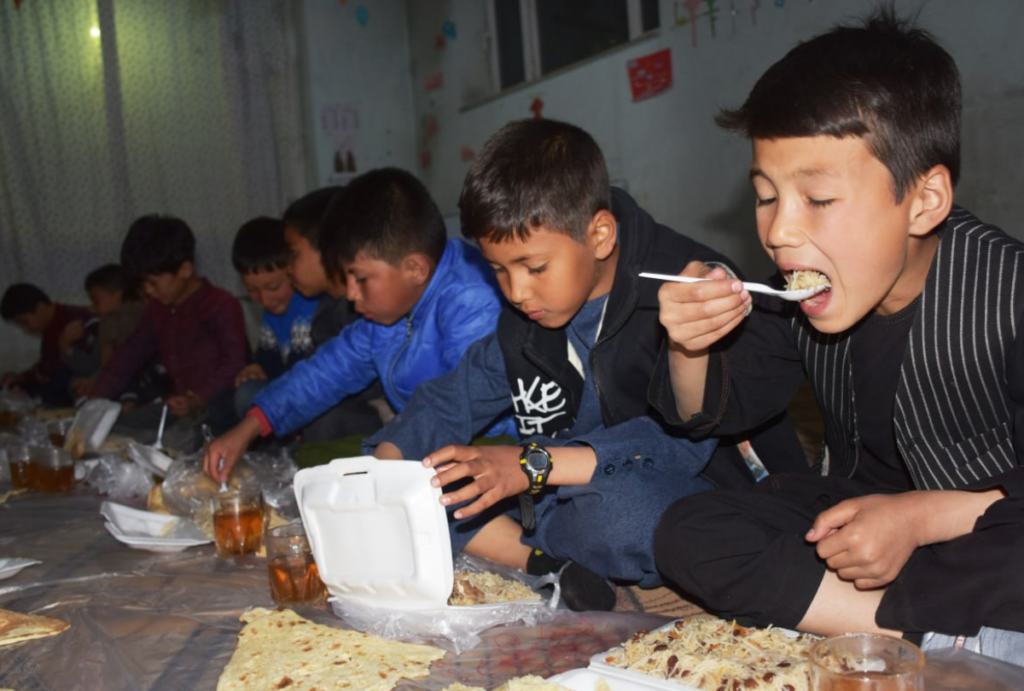
Why school meals matter more than you think
For many children, school represents more than a classroom. It is a place of safety, opportunity, and hope. For millions of children…