
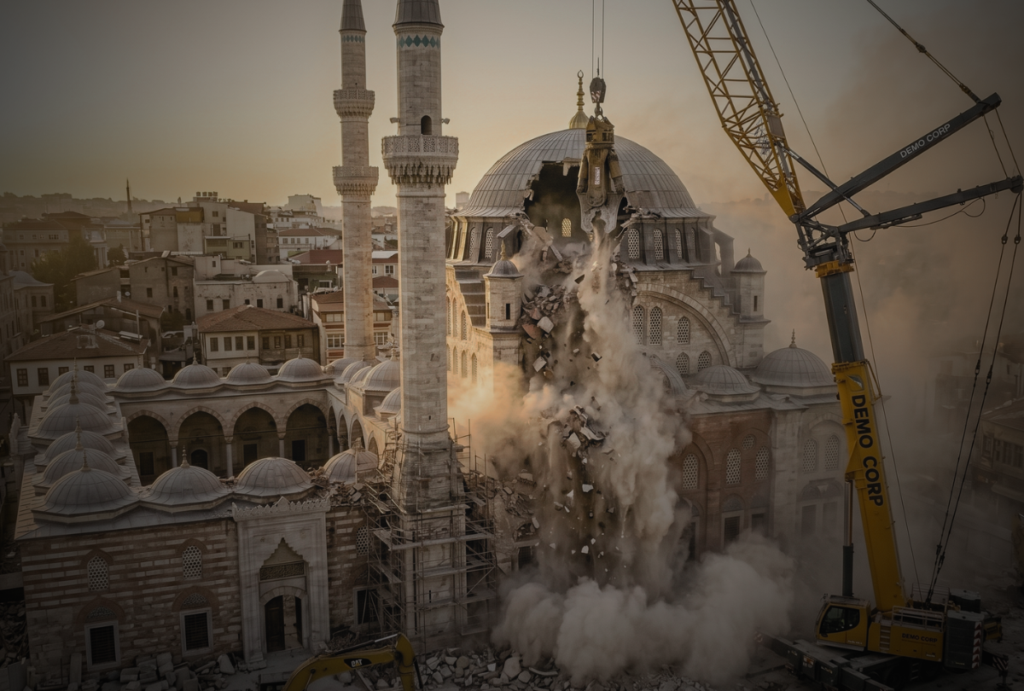
When thinking about what communities lose when a mosque is lost, it is easy to begin with the visible loss. A building disappears. A familiar gathering place is no longer there. Yet the deeper impact reaches much further.
A mosque is not simply a structure used for prayer. It is a sacred space where people worship, learn, support one another, and strengthen shared identity. It is where ordinary moments become communal moments.
For many Muslim communities, the mosque serves as a centre of continuity. Children are introduced to faith there. Families gather there. Friendships are formed there. Communities organize acts of charity and care through it.
The Quran reminds believers of the importance of these sacred places:
This verse highlights that places of worship are devoted to Allah (swt). Their value extends beyond physical presence because they help communities maintain their spiritual connection and collective life.
The mosque as the spiritual heart of a community
A mosque gives a community a place to gather in worship and remembrance.
Prayer performed together creates a rhythm that shapes communal life. People from different generations and experiences stand together with shared purpose and shared devotion.
These regular moments build relationships that cannot easily be replaced elsewhere.
When a mosque is lost, people may continue practicing individually, but something important changes. The shared experience of faith becomes harder to sustain.
These spaces become places where values are practiced and passed on.
Losing a place of belonging
Mosques help transform individuals into communities.
Children develop friendships. Parents find support. New members of the community establish relationships. Older generations remain involved and valued.
Without a mosque, these moments of connection may become less frequent.
This loss can affect younger generations in particular. Young people benefit from places where they can ask questions, receive guidance, and develop confidence in their identity.
When those spaces disappear, opportunities for mentorship and belonging can become more difficult to maintain.
A mosque often provides more than a gathering place. It provides stability and connection.
The loss of learning and guidance
Mosques have long served as places where faith and learning grow together.
People gather to study the Qur’an, deepen understanding, seek advice, and reflect on how Islamic values shape everyday life.
Education in the mosque often happens through both formal teaching and informal conversation.
The value of frequent connection to the mosque appears in a narration attributed to Imam Ali (as):
Thawab al-Amal wa Iqbal al-Amal, v.1, ch.61, h.108
This narration presents the mosque as a place of knowledge, guidance, companionship, and mercy.
When a mosque is lost, communities may lose access to these everyday opportunities for growth and reflection.
The disappearance of community support networks
Mosques Many of the strongest community relationships are built quietly.
Mosques often become places where people seek comfort after loss, receive help during hardship, and find encouragement through difficult periods.
Support may appear through organized initiatives, but often it happens in simple moments. Conversations after prayer. Shared meals. Acts of generosity. Practical help offered at the right time.
These forms of support strengthen resilience.
When a mosque is lost, those support networks can become harder to maintain.
Communities may still care for one another, but the central place that helped those connections grow becomes less accessible.
Loyalty through the example of the Ahlulbayt (as)
The example of the Ahlulbayt (as) shows that sacred spaces have always played an important role in preserving faith and strengthening communities.
Masjid al-Kufa remains an example of how a place of worship can become connected to justice, remembrance, and public life through its association with Imam Ali (as).
Within Shia tradition, gathering in remembrance of Imam Hussain (as) and the Ahlulbayt (as) helps communities renew values and maintain a living connection to their history.
These gatherings reinforce identity and strengthen communal bonds.
When a mosque is lost, communities may lose one of the places where these values continue to be taught and experienced together.
Why sacred spaces matter for future generations
Sacred spaces create continuity.
They help communities preserve knowledge, encourage service, and provide future generations with places where faith becomes lived experience.
Children who grow up with strong community spaces often inherit more than information. They inherit relationships, memories, and examples.
When a mosque disappears, the effects may continue long into the future.
That is why restoring sacred spaces matters. Communities need places where faith, learning, and belonging can continue to flourish.
Restore more than walls
A mosque is more than a place of prayer.
It is where communities gather, children learn, and support begins. It is where people grow in faith and where relationships are strengthened over time.
When a mosque is lost, communities may lose belonging, guidance, education, and connection. But when sacred spaces are restored, communities regain opportunities to worship together, support one another, and build a stronger future.
Supporting mosque-building initiatives helps restore the spiritual heart of a community.
Help create spaces where faith lives on. Help rebuild sacred spaces that restore communities.
Frequently asked questions
Why is a mosque important to a community?
A mosque serves as a centre for worship, education, community support, charitable activities, and social connection. It helps bring people together and strengthens communal bonds.
Why do communities lose when a mosque is lost?
Communities may lose a place for prayer, learning, youth engagement, social support, charitable work, and the shared experiences that create a strong sense of belonging.
Why are mosques important for young people?
Mosques provide young people with guidance, education, positive role models, and a sense of identity within a supportive faith community.
How do mosques support people during difficult times?
Mosques often help individuals and families through emotional support, charitable assistance, counselling, community programmes, and spiritual guidance.
What role do mosques play in preserving Islamic identity?
Mosques help pass Islamic knowledge, traditions, and values from one generation to the next through worship, education, and community activities.
How can supporting mosque-building projects help communities?
Supporting mosque-building projects helps create sacred spaces where people can worship, learn, build relationships, access support, and strengthen community life for generations to come.
More from Blog
Imam Hasan al-Askari (as): Preparing the next generation
The Wiladat of Imam Hasan al-Askari (as) offers believers an opportunity to reflect on the life of the eleventh Imam of the…
Knowledge as Sadaqah Jariyah: Why supporting education is a lasting legacy
Every believer hopes to leave behind a legacy that continues to earn the pleasure of Allah (swt). While many acts of charity…
Why school meals matter more than you think
For many children, school represents more than a classroom. It is a place of safety, opportunity, and hope. For millions of children…