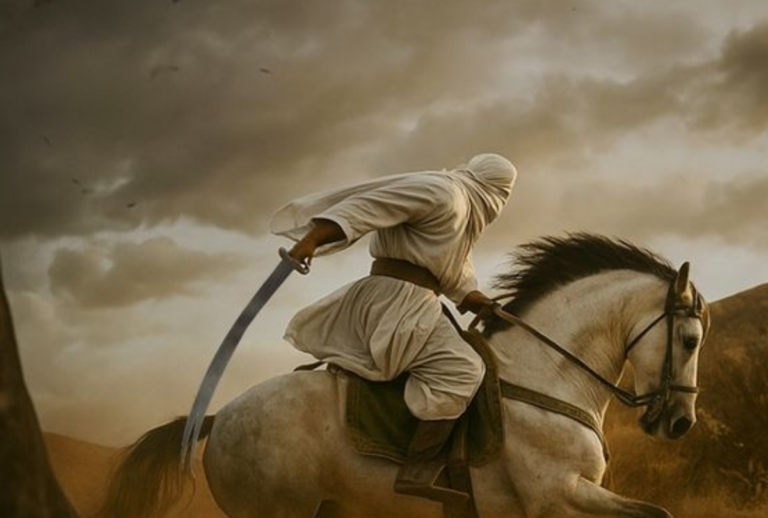

Seven Powerful Lessons from Imam Jafar al-Sadiq (as) That Still Matter Today
During the shift from the Umayyad Caliphate to the Abbasid Caliphate, Imam Jafar al-Sadiq (as) lived through political tension and uncertainty.
Instead of seeking authority, he focused on building knowledge and strengthening character.
His response to instability was steady and intentional rather than reactive.
His life continues to offer meaningful guidance across generations.
These seven lessons show how his example still applies in today’s world.
Lesson 1: Turn uncertainty into opportunity
He understood that uncertain times can create opportunities for meaningful progress.
Rather than waiting for ideal conditions, he used what was available to build knowledge.
This shows that disruption can be used productively instead of causing hesitation.
Today, uncertain moments can be used to grow skills and gain clarity.
Lesson 2: Not every opportunity is worth taking
Imam al-Sadiq (as) was invited to join political movements that sought influence, but he declined.
He recognized that some opportunities come with compromises that affect integrity.
Preserving truth mattered more than gaining position or recognition.
This teaches that not every opportunity should be accepted. In modern life, it is important to evaluate long-term impact before making decisions.
Lesson 3: Speak the truth with honour
Imam al-Sadiq (as) maintained independence from rulers and spoke with clarity when necessary.
He did not depend on authority or seek its approval.
His approach showed strength without unnecessary conflict.
He reinforced this by reportedly saying:
“Truthfulness is an honour.”
Bihar al-Anwar, v.78, p.269, n.109
This shows that honesty remains valuable, even when it is difficult.
Lesson 4: Carry yourself with dignity and humility
Imam al-Sadiq (as) was known for worship, discipline, and strong character in daily life.
He showed that dignity and humility can exist side by side.
His behavior reflected confidence without arrogance.
As he reportedly said:
“Good nature melts away mistakes just as the sun melts away ice.”
Al-Kafi, v.2, p.100, n.907
This reminds us that character shapes how others experience our knowledge and actions.
Lesson 5: Build knowledge that lasts
Imam al-Sadiq (as) focused on teaching and developing students who would carry knowledge forward.
His influence spread through generations, including scholars like Jabir ibn Hayyan.
He built a system where learning could continue beyond his lifetime.
This highlights the importance of sharing knowledge with others.
Today, lasting success is measured by what you contribute, not just what you achieve personally.
Lesson 6: Practice patience with purpose
Despite living under pressure and surveillance, Imam al-Sadiq (as) remained committed to teaching and guiding others.
His patience was active and intentional rather than passive.
He stayed focused without reacting emotionally to challenges.
This reflects the Qur’anic guidance:
“O you who believe! (In moments of distress,) Seek help through patience and prayers. Surely, Allah (swt) is with the patient ones.”
Surah Al-Baqarah, Ayah 153
It shows that patience, when combined with action, leads to meaningful results.
Lesson 7: Let faith show through action
His life demonstrated that faith should be visible through actions.
He emphasized this by reportedly saying:
“Three things bring about love: piety, humbleness, and generosity.”
Tuhaf al-Uqul, n.316
Even small acts of generosity can have a lasting impact.
Final Reflections
Imam al-Sadiq (as) demonstrated that real strength comes from knowledge, patience, and principled living.
He remained steady during uncertain times and stayed focused on what truly mattered.
His life offers a clear example of how to navigate pressure without losing direction.
These lessons continue to provide practical guidance today.
Applying them can help bring purpose, clarity, and balance into everyday life.
Frequently Asked Questions
He was the sixth Imam in Shia Islam, recognized for his knowledge, teaching, and strong moral character.
He played a major role in preserving and spreading Islamic knowledge during a time of political transition.
He avoided political involvement that could compromise his mission and focused on education instead.
He built a strong foundation of knowledge that influenced both religious and intellectual traditions.
His lessons encourage patience, honesty, learning, and strong character in daily life.
One of his well-known students was Jabir ibn Hayyan, who contributed to early scientific development.