What is a turbah? Meaning, purpose, and common misconceptions explained
It is a moment many people have witnessed.
A Muslim prepares to pray, places a small clay tablet on the floor, and prostrates upon it.
Observers may pause and wonder what that object is and whether it plays a role beyond prayer itself.
This uncertainty has often led to incorrect assumptions and, at times, unnecessary tension within the global community, even though the practice itself is rooted in humility and long-standing Islamic tradition.
Let’s explore what a turbah is, why it is used by some Muslims during sujood, and addresses common misconceptions in a clear and respectful way.
Sujood in the Quran: a universal act of humility
Sujood is one of the most powerful acts of worship in Islam.
It represents complete submission, humility, and closeness to Allah (swt).
Regardless of school of thought, prostration is a shared pillar of Muslim prayer.
And He reminds us:
“O you who believe! Bow down, prostrate and worship Allah (swt) your Lord, and do good so that you may succeed (in this world and the hereafter).”
Surah Al-Hajj, Verse 77
And He also says:
“So sing the praise of your Lord, and be of those who prostrate themselves (to Him).”
Surah Hijr, Verse 98
These verses highlight that the essence of sujood lies in devotion to Allah (swt), not in the object beneath one’s forehead.
What is a turbah?
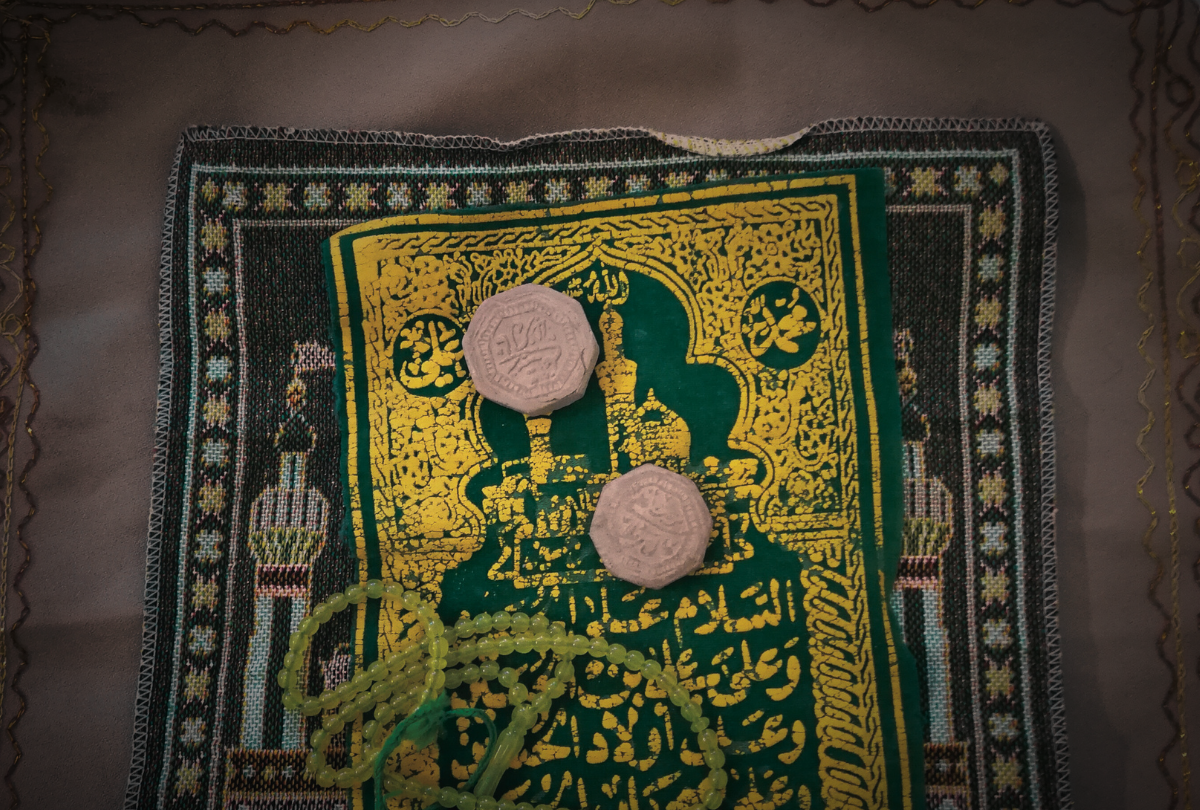
A turbah is a small tablet made from natural earth, most commonly clay.
Linguistically, the word turbah means soil or ground.
A turbah provides a clean and practical way to uphold this principle, especially when praying indoors or in urban environments.
Why Shias use a turbah during sujood
The reason Shias use a turbah is tied to an emphasis on humility and simplicity in worship.
Prostrating on natural earth is seen as a deeper expression of submission to Allah (swt)
Imam al-Sadiq (as) is reported to have said:
“Prostration on earth is superior because it is more profound in humility and submission to Allah, the Mighty and Majestic.”
Wasail al-Shia, h.6810
Using a turbah allows this form of sujood to be practiced consistently, regardless of setting, without elevating comfort or material above devotion.
Praying on earth is recognised across schools of thought
Prostrating on natural ground is not exclusive to Shia practice.
It was part of the lived example of Prophet Muhammad (saw).
Abu Said al-Khudri narrated:
“I saw Allah’s (swt) Apostle prostrating in mud and water and saw the mark of mud on his forehead.”
Sahih al-Bukhari, v.1, n.798
This narration confirms that sujood on earth was practiced by the Prophet (saw) himself, demonstrating its permissibility and validity across Islamic traditions.
A symbol of humility, not an object of worship
The intention, focus, and devotion are directed entirely towards Allah (swt).
One of the most widespread myths is that the turbah is worshipped.
This misunderstanding arises from unfamiliarity rather than belief.
In Islam, worship is directed only to Allah (swt).
The turbah holds no divine status, receives no prayers, and is not treated as an object of reverence.
It functions much like a prayer rug, serving only as a surface that facilitates proper sujood.
The focus of the prayer remains solely on Allah (swt).
The preference for the earth of Imam Hussain (as)
Some Shias prefer to prostrate on earth from Karbala, the land where Imam Hussain (as) was martyred.
This preference is deeply emotional and spiritual, rooted in remembrance of his sacrifice and the values he upheld.
Imam al-Sadiq (as) is reported to have said:
“Prostrating on the soil from the grave of Hussain (as) illuminates to the seven earths, and whoever has prayer beads made from the soil of Hussain’s (as) grave will be recorded as performing remembrance even if they do not use them for remembrance.”
Wasail al-Shia, h.6806
He is also reported to have said:
“Prostrating on the earth from al-Hussain’s (as) grave pierces the seven veils.”
Bihar al-Anwar, v.85
This preference does not change the direction or object of worship.
Instead, it connects sujood with a powerful legacy of faith, sacrifice, and moral courage.
Returning to the meaning of sujood
Sujood is meant to humble the believer before Allah (swt).
Whether performed on clay, soil, or stone, its purpose remains the same: complete submission and sincerity in worship.
When practices like the use of a turbah are understood through knowledge rather than assumption, they become a source of insight rather than division within the global community.
FAQ
A turbah is a small piece of natural earth, usually clay, used as a surface for sujood.
Because Shia jurisprudence emphasises prostration on natural materials from the earth, and a turbah ensures this principle is met anywhere.
It is not compulsory for all Muslims. It is a recommended practice within Shia Islam, while other schools permit a wider range of surfaces.
No. It has no independent power. Any spiritual value comes from intention, remembrance, and devotion to Allah (swt).
Yes. The Prophet (saw) was seen prostrating on mud and water, confirming its validity.
Because of the spiritual significance of Imam Hussain’s (as) sacrifice and the values his stand represents.