
Understanding Moonsighting in Islam: Meaning, Method, and Spiritual Significance
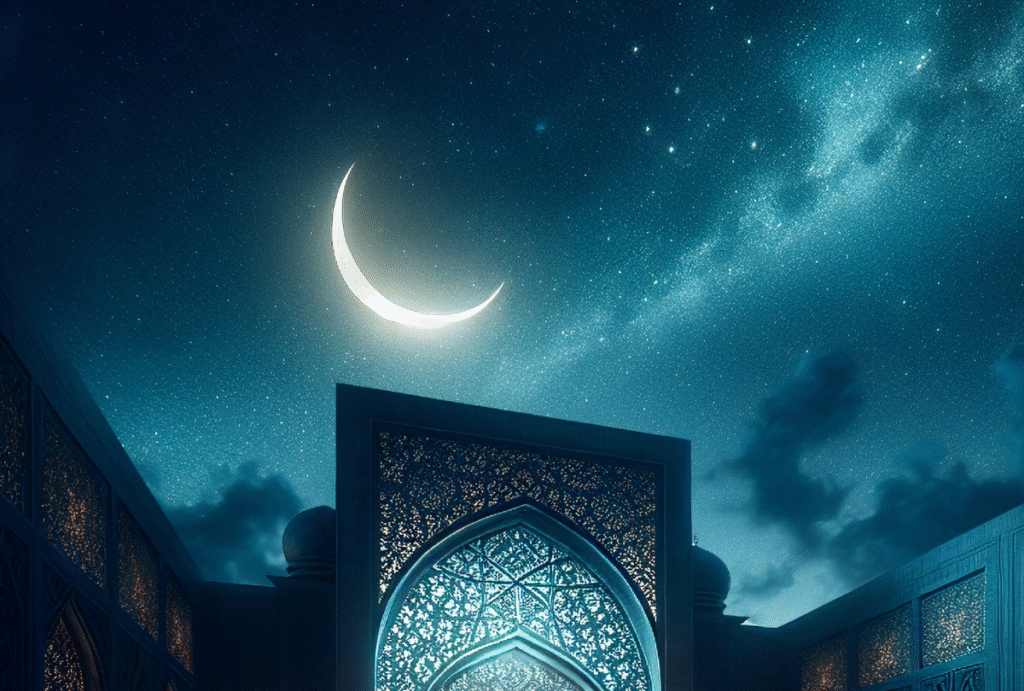
As an Islamic month draws to a close, many Muslims find themselves watching the horizon at sunset.
This simple yet meaningful act of waiting for the new crescent moon has guided Islamic life for generations.
One confirmed sighting can begin a new month, shape religious obligations, and unite believers around the world through a shared awareness of sacred time.
Because of this, moonsighting plays a central role in how worship is timed and observed.
It is not merely a way to mark dates.
It is a practice rooted in obedience to Allah (swt), attentiveness to His signs in creation, and adherence to the guidance of the Prophet (saww) and the Ahlulbayt (as).
When a Crescent Shapes Our Worship
The lunar nature of the Islamic calendar means that worship is directly connected to the movement of the moon.
Allah (swt) explains this wisdom in the Quran:
“They ask you concerning crescents. Tell (them), ‘The crescents are an indication of times fixed for people and for Hajj (and many other religious activities)’…”
Surah Baqarah, Verse 189
Through the crescent moon, acts such as fasting, pilgrimage, and other religious duties are placed within divinely appointed time.
Moonsighting reminds believers that worship does not begin at our convenience.
It begins in response to signs Allah (swt) has placed in the heavens.
Why Moonsighting Can Feel Confusing Today
In today’s connected world, moonsighting announcements can sometimes feel overwhelming.
Scientific forecasts, social media updates, and differing religious opinions may lead to uncertainty about when a new month truly begins.
For some families, this creates frustration or hesitation at moments meant to feel spiritually uplifting.
Often, this confusion arises when a sacred practice is framed as a debate rather than an act of devotion.
Moonsighting was never intended to divide the global community.
At its core, it calls believers toward patience, humility, and trust in divine guidance.
Choosing Knowledge and Calm Over Confusion
Learning the foundations of moonsighting helps replace uncertainty with confidence.
When believers understand how and why months begin, they are better able to approach worship with calm and intention.
This knowledge is especially valuable when preparing for major acts of devotion.
Clarity at the beginning of a month allows the heart to enter worship focused and at ease.
General Principles of Moonsighting and Juristic Differences
Islamic jurisprudence recognizes that qualified scholars may differ in their rulings on moonsighting.
These differences stem from how evidence is weighed and how legal principles are applied.
Respecting these differences is essential for maintaining harmony within the global community.
The following are general moonsighting principles according to Ayatollah Sayyid Sistani (ha), shared here for educational clarity.
- According to his rulings, an Islamic month begins when the new crescent is actually sighted. It does not begin solely based on astronomical claims that the moon has been “born”.
- A person may rely on their own sighting of the crescent with the naked eye.
- It is also permissible to rely on strong, trustworthy reports that provide confidence the moon has been sighted, such as reliable committees or multiple credible witnesses.
- If the crescent is not seen, the current month is completed as 30 days. After this, the new month begins automatically.
- A moonsighting in another location only applies if that place shares a similar horizon, meaning the crescent could also be visible where one lives under normal conditions.
- Astronomical data may help determine whether a sighting claim is possible or impossible, but it does not replace an actual or effectively actual sighting.
- These principles aim to safeguard the sincerity and integrity of worship.
Moonsighting and the Arrival of Shahr Ramadan
Although moonsighting applies to every Islamic month, it carries special emotional and spiritual weight when welcoming Shahr Ramadan.
The appearance of the crescent signals the start of a month devoted to fasting, prayer, and reflection.
Imam al-Ridha (as) is reported to have said
“Fast upon sighting it (the crescent) and break your fast upon sighting it.”
Wasail al-Shia, h.13343
Approaching this moment with understanding allows believers to enter the month of Ramadan with confidence and spiritual readiness rather than uncertainty.
Duas and Acts When the New Moon is Seen
Moonsighting is also a moment for remembrance and supplication.
One recommended act is the salat and dua for sighting the new moon, along with donating sadaqah.
Imam Sajjad (as) taught believers to respond to the sight of the crescent with Dua 43 from Sahifa Sajjadiya, a supplication filled with gratitude, hope, and humility.
There is also a short dua the Prophet (saww) recited upon sighting the crescent of Shahr Ramadan. A highly beneficial dua, it can be recited at the beginning of each month.
These prayers keep moonsighting firmly rooted in spirituality, reminding believers to begin each month with remembrance of Allah (swt).
Shared Understanding and a Shared Responsibility
Clear religious understanding builds trust within the global community.
When differences are approached with knowledge and respect, they become a source of mercy rather than division.
Returning to the Beauty of Sacred Time
Moonsighting invites believers to pause and observe Allah’s (swt) signs in creation.
Within a lunar calendar, worship moves with the moon, teaching patience, awareness, and trust.
Whether welcoming Shahr Ramadan or any other sacred month, the sight of the crescent calls believers to begin with unity, knowledge, and devotion.
FAQ
Moonsighting is the act of observing the new crescent moon to determine the start of an Islamic month in the lunar calendar.
Differences in geography, horizon visibility, and juristic rulings can affect when the crescent is seen.
According to Sayyid Sistani’s (ha) rulings, astronomical data can assist with assessing possibility but does not replace an actual or effectively actual sighting.
According to Sayyid Sistani (ha), if the crescent is not seen, the current month is completed as 30 days before the next month begins.
According to Sayyid Sistani (ha), this depends on whether the locations share a similar horizon.
It connects worship to divine signs and reminds believers that sacred time is set by Allah (swt).
More from Blog
How the Prophet (saww) Inspired a Legacy of Knowledge
Discover how Prophet Muhammad (saww) inspired a lasting legacy of knowledge and how supporting education continues one of Islam's greatest traditions through…

How Education Breaks the Cycle of Poverty
Discover how education helps break the cycle of poverty by creating opportunities for children, strengthening families, and building brighter futures. Support The…
Why was the First Revelation “Read”?
Discover why the first revelation began with “Read” and what Islam teaches about knowledge and education. Explore the message with The Zahra…