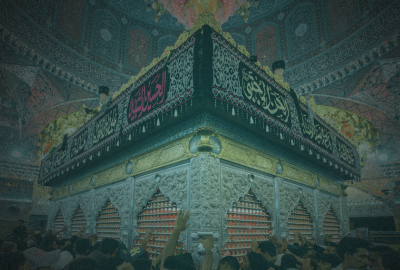
Karbala. Not only a city of influence and importance, but a profound land of tradition, history, and memory.
Located in Iraq, 100km southwest of the capital of Baghdad, the city of Karbala remains one of the most influential places of faith for Muslims across the world.
As we embrace the sacred month of Muharram, here are 5 things to know about the city of Karbala.
1. The Name Has Ancient Roots
The name Karbala has several possible origins. One theory says it may come from the Babylonian phrase “Karb-ila” or “Qurb-ila,” meaning “closeness to God.” Others believe it’s related to the term “Kar Babel,” once used to describe a group of ancient villages in the region.
Another possible theory comes from the Muslim scholar Yaqut al-Hamawi, who said the name refers to the area’s “soft earth” – the same land where Imam Hussain (as) was martyred.
Some also believe Karbala comes from two Arabic words: “karb” (sorrow) and “bala” (affliction), reflecting the tragedy of the Battle of Karbala.
Read more about the Battle of Karbala here.
2. The Battle of Karbala
In 680 AD, the Battle of Karbala took place – forever changing the course of Islamic history.
Imam Hussain (as), the grandson of Prophet Muhammad (saww), stood up against the injustice of Yazid and was martyred for his stance against oppression and tyranny.
This event became a turning point in Islam and Imam Hussain’s (as) sacrifice is seen as a stand for justice and dignity.
Each year, Muslims commemorate this event during Muharram and Arbaeen in Karbala and around the world – and honor the legacy of Imam Hussain (as).
3. Imam Hussain (as) is Buried in Karbala
Karbala is home to the burial place of Imam Hussain (as) and his loyal brother Hazrat Abbas (as), both of whom were martyred in the Battle of Karbala.
Their shrines stand across from each other in remembrance, and are visited by millions of pilgrims each year who pray next to the resting place of these two noble figures.
Learn more about how to honor the life of Imam Hussain (as), and keep his legacy alive here.
4. Karbala is a Center for Islamic Learning
Karbala is also a hub of education. It is home to respected institutions like AhlulBayt University and The University of Karbala, where students study a wide range of subjects. This includes Islamic sciences, law, medicine, and religious studies.
Alongside Najaf and Qom, Karbala remains one of the key centers of Islamic learning.
5. The Arbaeen Walk is the Largest Peaceful Gathering in the World
Every year, over 22 million people walk to Karbala for Arbaeen, which takes place 40 days after Ashura, the day Imam Hussain (as) was martyred.
It’s the largest annual public gathering in the world – even bigger than the pilgrimage of Hajj.
Pilgrims walk for days to reach Karbala, and along the way, local Iraqis offer food, shelter, tea, and warmth to honor the guests of Imam Hussain (as). This hospitality is a living reflection of Imam Hussain’s (as) message of faith and devotion.
Why Karbala Still Matters Today
Karbala is not just a city – it’s a symbol of justice and spiritual devotion.
As we remember and mourn for the tragedy that befell Karbala more than 1300 years ago, it remains imperative on our parts to respect the long history of the land that would forever change the course of Islam.
The land of Karbala continues to influence and inspire countless Muslims around the world – will it inspire you?
FAQs
Karbala is a holy city in Iraq known for the Battle of Karbala in 680 AD, where Imam Hussain (as), the grandson of Prophet Muhammad (saww), was martyred. It symbolizes sacrifice, justice, and faith, especially for Shia Muslims.
The Battle of Karbala was fought between Imam Hussain (as) and the army of Yazid. Imam Hussain (as) refused to pledge allegiance to an unjust ruler and was martyred along with his companions. His sacrifice is commemorated every year during Muharram and Arbaeen.
Imam Hussain (a) is buried in Karbala, Iraq. His shrine is a major pilgrimage site visited by millions of people annually, especially during Arbaeen.
The Arbaeen Walk is a spiritual journey that takes place 40 days after Ashura. Millions of pilgrims walk to Karbala to honor Imam Hussain (as). It is considered the largest peaceful gathering in the world.
Yes, Karbala is home to prominent Islamic institutions like AhlulBayt University and The University of Karbala. It offers advanced studies in religious sciences, law, and various academic fields.
More from Blog
Knowledge as Sadaqah Jariyah: Why supporting education is a lasting legacy
Every believer hopes to leave behind a legacy that continues to earn the pleasure of Allah (swt). While many acts of charity…
Why school meals matter more than you think
For many children, school represents more than a classroom. It is a place of safety, opportunity, and hope. For millions of children…
5 Quran Verses About Knowledge and What They Teach Us
Knowledge is one of the greatest blessings Allah (swt) has given humanity. Through knowledge, we strengthen our faith, deepen our understanding of…