
Arbaeen is one of the most significant moments of remembrance in the Islamic world. It brings together millions of people who gather to honor the legacy of Imam Hussain (as), reflect on the tragedy of Karbala, and renew their commitment to values rooted in justice, faith, and compassion.
To understand what Arbaeen is, it is important to see it not only as a historical commemoration but as a living expression of devotion that continues to shape hearts and communities today.
Arbaeen marks the fortieth day after the day of Ashura, when Aba Abdillah (as), the grandson of Prophet Muhammad (saww), was martyred in Karbala in 61 AH. This day has grown into one of the largest annual religious gatherings in the world, yet its essence remains deeply personal: remembrance, reflection, and renewal.
The meaning behind Arbaeen and the number forty
The word Arbaeen literally means “forty”.
In Islamic tradition, the number forty is often associated with completion, transition, and spiritual reflection. Arbaeen, therefore, represents the completion of the mourning period following Ashura.
However, this completion does not signal an ending. Instead, it marks a continuation of remembrance and a renewed commitment to the principles Imam Hussain (as) stood for.
Arbaeen invites believers to reflect on their own spiritual journey and consider how faith is expressed through action, not only belief.
Karbala and the stand of Imam Hussain (as)
The origins of Arbaeen are rooted in the events of Karbala.
Imam Hussain (as) refused to pledge allegiance to Yazid because he believed it would compromise the moral integrity of Islam. Alongside his family and companions, he stood against injustice despite overwhelming opposition.
In 61 AH, this stand led to the tragedy of Karbala, where Imam Hussain (as) and many of his companions were martyred.
His sacrifice became a defining moment in Islamic history, symbolizing resistance against oppression and the preservation of truth.
Arbaeen emerged as a way of preserving this memory and ensuring that the message of Karbala continues to be passed from generation to generation.
A Quranic foundation for love of the Ahlulbayt (as)
The connection between Arbaeen and devotion to the Ahlulbayt (as) is deeply rooted in Islamic teachings.
The Quran states:
This verse highlights the importance of love and connection to the Ahlulbayt (as).
For many believers, Arbaeen becomes a practical expression of this love through remembrance, visitation, and acts of service.
Arbaeen as a time of reflection and spiritual growth
When asking the question “What is Arbaeen?”, it is essential to understand its spiritual dimension.
Arbaeen is not only about mourning. It is also about transformation.
Believers use this time to reflect on values such as patience, integrity, humility, and sacrifice. The memory of Karbala becomes a mirror through which individuals examine their own lives.
Key reflections during Arbaeen often include:
How can faith guide daily actions?
What does it mean to stand for justice today?
How do we remain steadfast in difficult circumstances?
In this way, Arbaeen becomes a moment of inner renewal and spiritual clarity.
The pilgrimage of ziyarat to Karbala
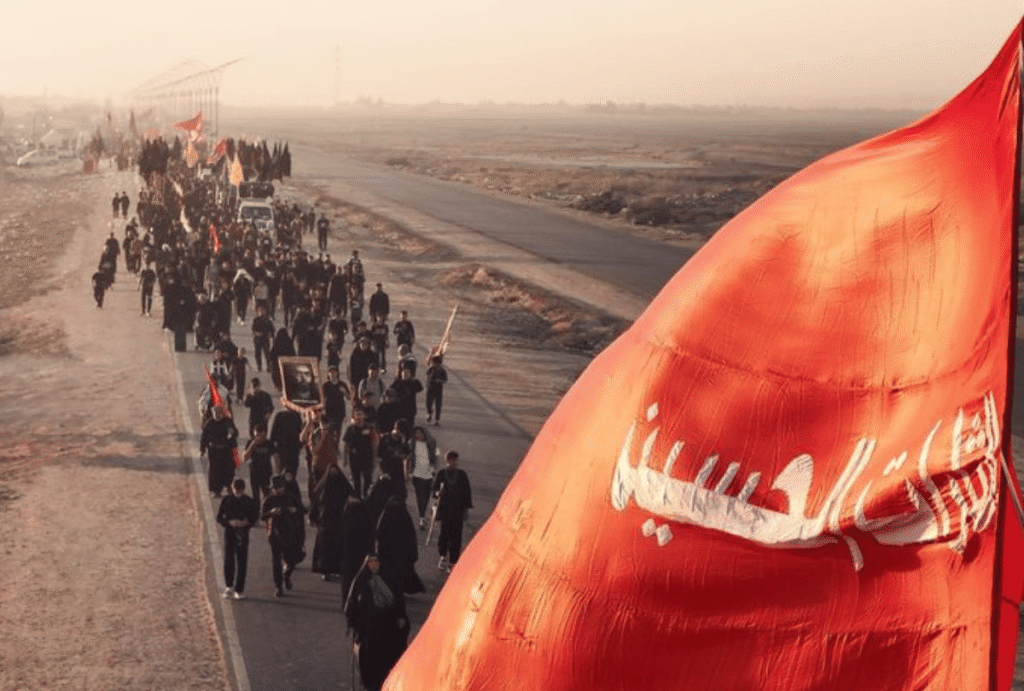
Millions of people travel to Karbala during this period, many of them walking long distances as an expression of devotion.
The Arbaeen walk is not simply a physical journey. It is an act of humility, love, and spiritual connection. Each step becomes a form of remembrance and intention.
For those unable to travel, the spirit of ziyarat remains accessible through prayer, reflection, and acts of charity wherever they are.
The Arbaeen walk and the spirit of collective service
One of the most powerful aspects of Arbaeen is the atmosphere of service that surrounds it.
Along the pilgrimage route, volunteers provide food, water, shelter, and care for travellers without expecting anything in return.
This culture of generosity reflects the teachings of Imam Hussain (as), whose life and sacrifice continue to inspire selflessness and compassion.
Arbaeen becomes a living example of community support, where millions are served by millions, united by shared devotion.
Lessons from the Ahlulbayt (as) in preserving Karbala
The message of Karbala did not end with the tragedy itself. It was preserved and conveyed by the Ahlulbayt (as), especially Sayyida Zainab (as) and Imam Zain al-Abideen (as).
Their patience and strength ensured that the truth of Karbala was not forgotten.
This enduring legacy is reflected in a narration from Imam al-Sadiq (as):
This narration highlights the depth of grief connected to Imam Hussain (as), while also reinforcing the importance of remembering his sacrifice.
Arbaeen keeps this remembrance alive, ensuring that the message continues to inspire action and reflection.
A source of inspiration for today’s world
In modern times, Arbaeen continues to hold deep relevance.
The themes of justice, dignity, and moral courage resonate in many aspects of contemporary life.
Arbaeen encourages believers to connect faith with responsibility, reminding them that remembrance should lead to action.
It asks individuals and communities to consider how they can embody compassion, stand against injustice, and support those in need.
This is why Arbaeen continues to grow as a global expression of unity and devotion.
Walk with Hussain
Arbaeen reminds us that remembrance is not static. It is movement, service, and devotion in action.
Millions journey towards Imam Hussain (as).
This is a time when faith becomes visible through compassion, and remembrance becomes a shared responsibility carried by communities around the world.
Frequently asked questions
What is Arbaeen?
Arbaeen is the fortieth day after Ashura, marking the martyrdom of Imam Hussain (as) in Karbala. It is observed through remembrance, pilgrimage, and acts of devotion.
Why is Arbaeen important in Shia Islam?
Arbaeen is important because it honors the sacrifice of Imam Hussain (as) and reinforces values such as justice, truth, and faith.
What happens during Arbaeen?
During Arbaeen, people engage in mourning, prayer, ziyarat, charitable acts, and large-scale pilgrimage to Karbala.
What is the Arbaeen walk?
The Arbaeen walk is a pilgrimage on foot towards Karbala, symbolising devotion, humility, and spiritual commitment.
Do all Muslims observe Arbaeen?
Arbaeen is most commonly observed by Shia Muslims, though its message of sacrifice and justice is respected by many others.
Can someone participate in Arbaeen without travelling?
Yes. Many people observe Arbaeen through prayer, remembrance gatherings, charity, and reflection on the life of Aba Abdillah (as).
More from Blog
Why school meals matter more than you think
For many children, school represents more than a classroom. It is a place of safety, opportunity, and hope. For millions of children…
5 Quran Verses About Knowledge and What They Teach Us
Knowledge is one of the greatest blessings Allah (swt) has given humanity. Through knowledge, we strengthen our faith, deepen our understanding of…
Education in Crisis: When Conflict Steals the Classroom
Conflict doesn't only destroy buildings—it can also steal a child's future. For millions of children around the world, war and displacement mean…