
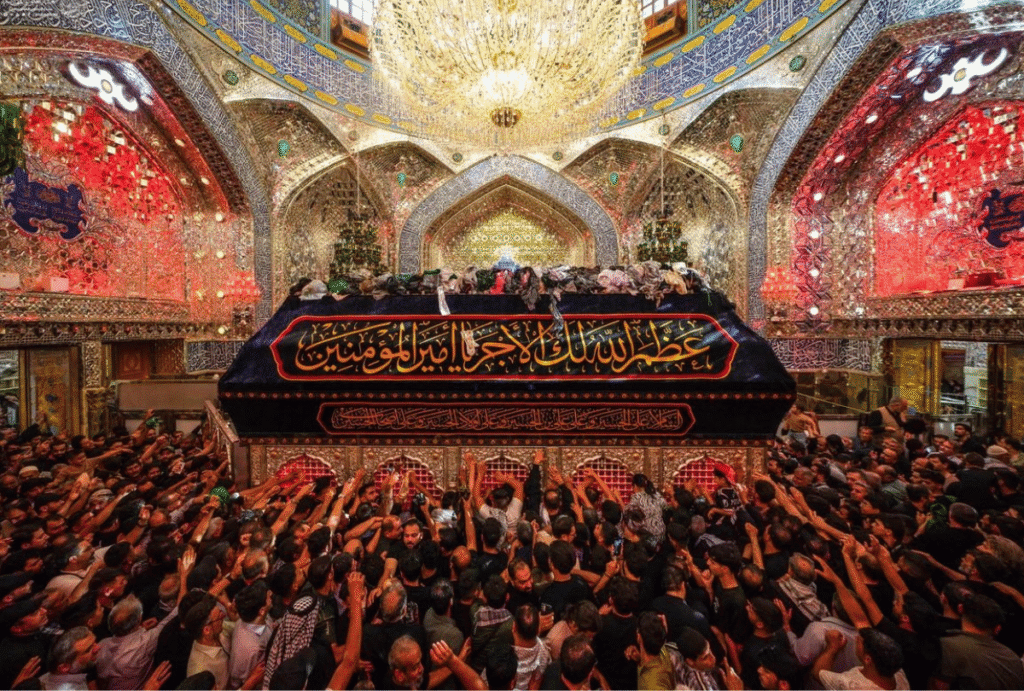
Ziyarat Arbaeen is one of the most meaningful acts of devotion for many Shia Muslims around the world. Observed on the twentieth of Safar, Arbaeen marks forty days since the martyrdom of Imam Hussain (as) and his companions in Karbala.
For believers, Ziyarat Arbaeen is not only a remembrance of a tragic moment in history. It is a renewal of loyalty to Imam Hussain (as), a commitment to the principles he stood for, and a reminder to uphold justice, dignity, and faith in everyday life.
Whether performed by those travelling to Karbala or recited by those remembering Imam Hussain (as) from their homes, Ziyarat Arbaeen allows believers to strengthen their connection with the message and legacy of Karbala.
The spiritual importance of Arbaeen
Arbaeen holds a unique place in Islamic tradition because it represents the fortieth day after the martyrdom of Imam Hussain (as). The period of forty days carries spiritual significance, often associated with reflection, growth, and renewal.
The commemoration of Arbaeen allows believers to continue remembering the sacrifice of Imam Hussain (as) beyond Ashura. It transforms mourning into a lasting commitment to the values that shaped the stand of Imam Hussain (as).
The Quran highlights the importance of respecting and honoring what Allah (swt) has made sacred:
For many believers, honoring Imam Hussain (as) and preserving the message of Karbala represents an expression of this devotion. Through remembrance, reflection, and action, Arbaeen becomes a means of strengthening faith and renewing spiritual awareness.
What is Ziyarat Arbaeen?
Ziyarat Arbaeen refers to the specific visitation prayer recited on the twentieth of Safar, as well as the spiritual act of visiting Imam Hussain (as). While millions of people travel to the holy city of Karbala each year, the ziyarat can also be performed by those who are unable to make the physical journey.
The text of Ziyarat Arbaeen begins by sending peace and greetings upon Imam Hussain (as). It recognizes his devotion to Allah (swt), his sacrifice for the preservation of Islam, and the injustice he faced at Karbala.
The ziyarat serves as both a prayer and a declaration of allegiance. Through its words, believers affirm their love for Imam Hussain (as) and reject the oppression that led to his martyrdom.
Ziyarat Arbaeen as a sign of faith
The importance of Arbaeen is highlighted in a narration attributed to Imam Hassan al-Askari (as).
This narration reflects the special spiritual position of Arbaeen within Shia tradition. It shows that remembering Imam Hussain (as) is not simply about looking back at history. It is a living expression of faith and a commitment to following the path of the Ahlulbayt (as).
Love for the Ahlulbayt (as) and following their path
The relationship between believers and the Ahlulbayt (as) is built upon love, loyalty, and action. The Quran states:
This love is expressed through remembrance and by following the example of the family of the Prophet (saww). Ziyarat Arbaeen allows believers to demonstrate their love for Imam Hussain (as) by reaffirming their commitment to his teachings.
Learning from the legacy of the Ahlulbayt (as)
The message of Karbala continued after the martyrdom of Imam Hussain (as). The efforts of Sayyida Zainab (sa) and Imam Zain al-Abideen (as) played an important role in preserving and sharing the truth of what happened.
Despite facing immense hardship, Sayyida Zainab (sa) remained steadfast and delivered a powerful message of truth and resilience. Imam Zain al-Abideen (as) also continued guiding the community and keeping the memory of Karbala alive.
Their example teaches believers that loyalty to Imam Hussain (as) requires more than remembrance. It requires carrying forward his principles through compassion, service, and responsibility.
The message of justice and resistance
One of the central messages of Ziyarat Arbaeen is the rejection of oppression and the pursuit of justice.
Imam Hussain (as) stood against injustice despite knowing the difficulties he would face. His sacrifice became a timeless example of courage and moral responsibility.
For believers today, Arbaeen is an opportunity to reflect on how they can embody these values in their own lives. It encourages people to support those in need, defend dignity, and contribute positively to their communities.
The global journey of Arbaeen
Each year, millions of people from across the world travel to Karbala to commemorate Arbaeen. This gathering represents one of the largest expressions of collective devotion and remembrance.
However, the spirit of Arbaeen is not limited to the physical journey. Those who cannot travel can still participate through prayer, charity, service, and recitation of Ziyarat Arbaeen.
The importance of this occasion lies in keeping the message of Imam Hussain (as) alive and allowing each generation to connect with the values of Karbala.
Remembering the sacrifice of Imam Hussain (as)
The depth of grief and love felt for Imam Hussain (as) is reflected in the narrations of the Ahlulbayt (as).
This narration highlights the profound impact of Imam Hussain’s (as) sacrifice. His stand in Karbala continues to inspire millions because it represents the defense of truth, faith, and justice.
Walking the path of Hussain (as) beyond Arbaeen
Ziyarat Arbaeen keeps alive the message of Imam Hussain (as) by connecting believers with his sacrifice, values, and commitment to justice. It reminds us that the journey of Karbala is not only remembered but carried forward through faith, service, and action.
Millions journey towards Aba Abdillah (as). Support the people and communities serving this extraordinary movement. Let your giving walk beside them and help continue the movement of devotion that has inspired generations.
Frequently asked questions
What is Ziyarat Arbaeen?
Ziyarat Arbaeen is a special visitation prayer associated with Imam Hussain (as), recited on the twentieth of Safar. It can be performed in Karbala or from anywhere in the world.
Why is Ziyarat Arbaeen important?
Ziyarat Arbaeen is important because it commemorates the sacrifice of Imam Hussain (as), renews devotion to the Ahlulbayt (as), and encourages believers to follow principles of justice and faith.
Is visiting Karbala required to perform Ziyarat Arbaeen?
No. Although visiting Karbala during Arbaeen is highly valued, believers can recite the ziyarat wherever they are and participate spiritually in the remembrance.
Why is Arbaeen observed forty days after Ashura?
Arbaeen marks forty days after the martyrdom of Imam Hussain (as). The number forty carries spiritual significance in Islamic tradition and represents reflection and renewal.
What is the message of Ziyarat Arbaeen?
Ziyarat Arbaeen teaches loyalty, sacrifice, patience, and resistance against injustice while encouraging believers to follow the example of Imam Hussain (as).
Where can I find the text of Ziyarat Arbaeen?
Ziyarat Arbaeen is available in many Islamic devotional resources and collections, such as Mafatih al-Jinan, as well as widely used Shia prayer books and online resources.
More from Blog

Why school meals matter more than you think
For many children, school represents more than a classroom. It is a place of safety, opportunity, and hope. For millions of children…
5 Quran Verses About Knowledge and What They Teach Us
Knowledge is one of the greatest blessings Allah (swt) has given humanity. Through knowledge, we strengthen our faith, deepen our understanding of…
Education in Crisis: When Conflict Steals the Classroom
Conflict doesn't only destroy buildings—it can also steal a child's future. For millions of children around the world, war and displacement mean…