
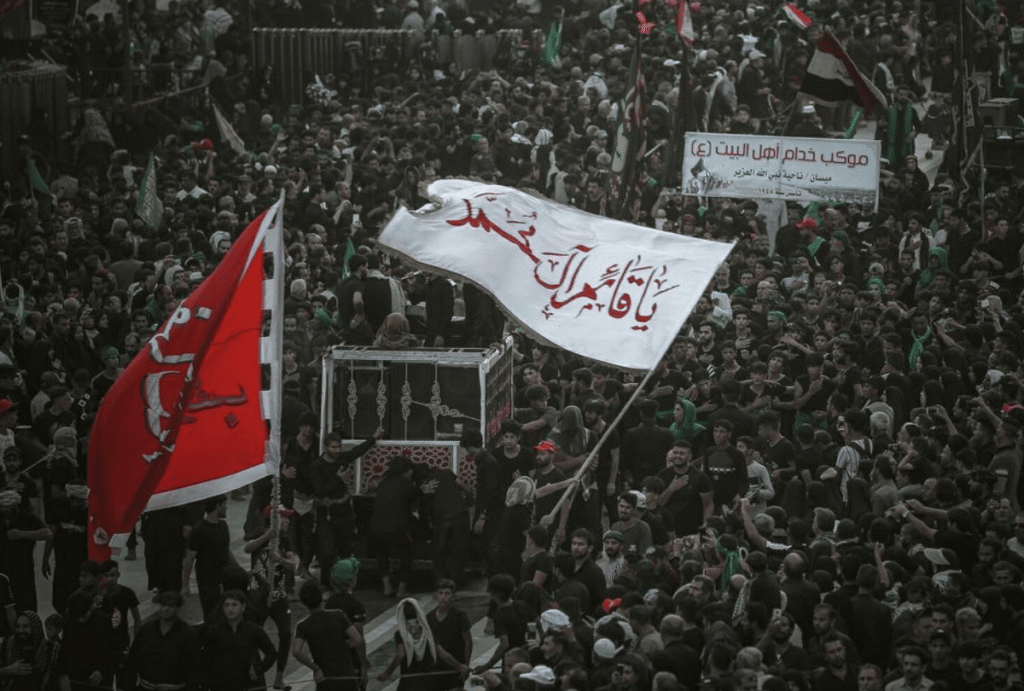
Each year, millions of people from around the world make their way to Karbala, Iraq, to commemorate Arbaeen and honor the sacrifice of Imam Hussain (as). More than a historical remembrance, Arbaeen has become a global movement rooted in faith, service, unity, and the timeless pursuit of justice.
Observed on the 40th day after the martyrdom of Imam Hussain (as) in 680 CE (61 AH), Arbaeen is among the most important occasions in the Islamic calendar for followers of the Ahlulbayt (as). It commemorates the stand taken by Imam Hussain (as) against tyranny and reminds believers that truth and justice are worth every sacrifice.
Allah (swt) reminds us in the Holy Quran:
For those who undertake the journey, Arbaeen is far more than traveling to a sacred destination. It is an act of devotion that renews one's commitment to the principles upheld by Imam Hussain (as) and strengthens the bond between believers across the globe.
Here are five facts that help explain why Arbaeen is recognized as the world's largest annual gathering.
1. Arbaeen is the largest annual peaceful gathering on earth
Arbaeen is remarkable not only for its religious importance but also for its extraordinary scale. Every year, millions of pilgrims gather in Iraq, with attendance regularly surpassing 20 million people. This makes Arbaeen widely recognized as the largest annual peaceful religious gathering in the world.
Despite the enormous crowds, the gathering is defined by worship, generosity, and mutual care. People travel from every corner of the globe, united by their love for Imam Hussain (as) and their desire to commemorate his sacrifice.
Unlike many large public events, Arbaeen is centered entirely on remembrance. Every step toward Karbala symbolizes loyalty to Imam Hussain (as) and a renewed commitment to the values he gave his life to protect.
2. The famous walk from Najaf to Karbala spans about 80 kilometers
Although pilgrims travel to Karbala through various routes, the best-known part of Arbaeen is the walk from Najaf to Karbala. Stretching approximately 80 kilometers, it has become one of the defining experiences of the pilgrimage.
The route is marked by 1,452 numbered poles, each placed roughly 50 meters apart. These markers help pilgrims measure their progress while guiding them along one of the world's largest religious walking routes.
For many participants, the physical effort involved in the journey carries deep spiritual meaning. Walking long distances in remembrance of Imam Hussain (as) reflects perseverance, sacrifice, and gratitude while recalling the hardships endured by his family after the tragedy of Karbala.
The destination is important, but so too is the journey itself. Every mile walked becomes an expression of love, faith, and dedication to the legacy of Imam Hussain (as).
3. Thousands of volunteers serve pilgrims along the way
One of the most inspiring features of Arbaeen is the spirit of selfless service displayed throughout the pilgrimage. Thousands of volunteer-operated mowkebs line the roads leading to Karbala, offering assistance to every traveler regardless of nationality or background.
These hospitality stations provide meals, drinking water, places to sleep, shower facilities, medical care, and many other essential services completely free of charge. Families, organizations, and local communities often spend months preparing to welcome the guests of Imam Hussain (as).
This extraordinary generosity reflects the values that define Arbaeen. Service becomes an act of worship, and caring for others becomes a practical expression of love for the Ahlulbayt (as).
The tradition of the mowkebs has become one of the defining characteristics of Arbaeen, demonstrating that the pilgrimage is as much about serving others as it is about reaching Karbala.
4. Visiting Imam Hussain (as) on Arbaeen is a sign of a believer
The importance of Arbaeen is firmly rooted in the teachings of the Ahlulbayt (as). Long before millions began making the journey each year, the Imams (as) emphasized the spiritual significance of visiting Imam Hussain (as).
This narration demonstrates the unique status of Ziyarat Arbaeen within the teachings of the Ahlulbayt (as). For millions of believers, making the journey to Karbala is an opportunity to strengthen their faith, renew their loyalty to Imam Hussain (as), and reaffirm the principles for which he sacrificed everything.
Nearly fourteen centuries after Karbala, the message of Imam Hussain (as) continues to inspire people to uphold justice, compassion, and unwavering faith in every generation.
5. Arbaeen welcomes millions from across the world
Although Arbaeen is one of the most significant commemorations in Shia Islam, its reach extends far beyond a single community. Every year, people from different countries, cultures, and backgrounds make the journey to Karbala, creating an extraordinary display of unity and shared purpose.
Pilgrims travel from every continent, each bringing their own story while walking together toward the shrine of Imam Hussain (as). What unites them is not language, nationality, or ethnicity, but a shared commitment to the timeless values embodied by Imam Hussain (as): justice, compassion, dignity, and standing against oppression.
His stand at Karbala continues to resonate with people almost 1,400 years later because the principles he defended remain universally relevant. Arbaeen has become a living reminder that the pursuit of truth and justice can inspire people across generations and cultures.
The international character of the gathering is one of the reasons Arbaeen continues to grow each year. It demonstrates that the legacy of Imam Hussain (as) belongs to all who seek to uphold justice and serve humanity.
Why Arbaeen continues to inspire the world
Arbaeen is far more than a pilgrimage. It is a global demonstration of faith, service, and unity that brings millions together in remembrance of Imam Hussain (as).
Almost fourteen centuries after the tragedy of Karbala, the message of Imam Hussain (as) continues to shape hearts and communities around the world. The Arbaeen Walk, the countless acts of generosity along the route, and the collective remembrance of his sacrifice all reflect values that remain as meaningful today as they were in 680 CE (61 AH).
The spirit of service surrounding Arbaeen has also gained international recognition. In 2019, UNESCO inscribed the traditions of hospitality and services associated with Arbaeen on its Representative List of the Intangible Cultural Heritage of Humanity. This recognition acknowledges the remarkable culture of volunteerism that defines the pilgrimage and the generosity shown by thousands of mowkebs serving millions of visitors.
Whether someone walks from Najaf to Karbala, welcomes pilgrims into a mowkeb, or supports those making the journey, every act contributes to preserving the legacy of Imam Hussain (as).
Keeping the spirit of Arbaeen alive
The lessons of Karbala are not confined to history. Imam Hussain (as) stood for truth, dignity, compassion, and resistance to oppression, and those values continue to guide believers today.
Each year, Arbaeen gives millions the opportunity to renew that commitment through worship, remembrance, and service. While not everyone is able to travel to Karbala, everyone can share in the spirit of Arbaeen by helping those who make the journey possible.
As millions journey toward Imam Hussain (as), your generosity can help support the communities and volunteers who welcome and care for pilgrims along the way. Let your giving walk beside them by supporting the people serving this extraordinary movement and helping continue the legacy of devotion inspired by Imam Hussain (as).
Frequently asked questions
What is Arbaeen?
Arbaeen marks the 40th day after the martyrdom of Imam Hussain (as) at the Battle of Karbala in 680 CE (61 AH). It is one of the most important occasions for followers of the Ahlulbayt (as), with millions traveling to Karbala each year to perform Ziyarat Arbaeen and honor his sacrifice.
Why is Arbaeen considered the world’s largest annual gathering?
Arbaeen is widely recognized as the world's largest annual peaceful religious gathering because millions of pilgrims travel to Karbala every year. In recent years, attendance has exceeded 20 million people, making it larger than any other annual pilgrimage or public gathering.
How long is the Arbaeen Walk?
The best-known Arbaeen route is the walk from Najaf to Karbala, which is approximately 80 kilometers (50 miles) long. Along the route, 1,452 numbered poles help pilgrims measure their progress and navigate the journey.
What are mowkebs during Arbaeen?
Mowkebs are volunteer-run hospitality stations found along the Arbaeen routes. They provide pilgrims with free meals, water, places to rest, accommodations, medical assistance, and other essential services throughout the journey.
Do only Shia Muslims participate in Arbaeen?
While Arbaeen is especially significant for Shia Muslims, the gathering welcomes people from many communities, nationalities, and backgrounds. Its universal message of justice, sacrifice, compassion, and service continues to inspire participants from around the world.
Why is Arbaeen important today?
Arbaeen remains deeply relevant because it keeps alive the message of Imam Hussain (as). The pilgrimage reminds believers of the importance of standing for truth, serving others, and opposing injustice while strengthening faith through remembrance and collective devotion.
More from Blog
Why school meals matter more than you think
For many children, school represents more than a classroom. It is a place of safety, opportunity, and hope. For millions of children…
5 Quran Verses About Knowledge and What They Teach Us
Knowledge is one of the greatest blessings Allah (swt) has given humanity. Through knowledge, we strengthen our faith, deepen our understanding of…
Education in Crisis: When Conflict Steals the Classroom
Conflict doesn't only destroy buildings—it can also steal a child's future. For millions of children around the world, war and displacement mean…