The powerful role of Prophet Isa (as) in the Government of Imam al-Mahdi (ajtfs)
Many Muslims hold the belief that Prophet Isa (as) will return before the end of times.
Across Islamic traditions, his return is often described as taking place during the era of Imam al-Mahdi (ajtfs).
Together, these two personalities are portrayed as working in harmony to restore justice, uphold truth, and guide the global community towards a more just and faithful world.
Who is Prophet Isa (as) in Islam?
Prophet Isa (as) holds a unique and honored place in Islam as one of the greatest prophets.
Muslims believe in his miraculous birth, his mission as a messenger of Allah (swt), and the many signs associated with his life.
The Quran emphasizes his significance in the following verse:
“(The angel) said, “So shall it be. Your Lord said, ‘It is easy for me. And We are (creating your son without a father as We intend) to make him a sign for the people and a mercy from Us. This is a matter which has already been decreed.’”
Surah Maryam, Ayah 21
This verse shows how Prophet Isa (as) is regarded as a sign and a mercy for humanity.
Islamic teachings also emphasize that he was not killed, but rather raised by Allah (swt), and that he will return before the Day of Judgment.
His return is commonly associated with the defeat of falsehood and the restoration of justice.
In Islamic scholarship, he is also recognized among the greatest law-bearing prophets.
Imam al-Baqir (as) has reportedly said:
“There are five Prophets who are the owners of Sharia as follows: Nuh (as), Ibrahim (as), Musa (as), Isa (as) and Muhammad (saww).”
Al-Khisal, n.74
Who is Imam al-Mahdi (ajtfs)?
He was born on the 15th of Shaban in 255 AH, and is currently in occultation (ghaybah), meaning he remains alive but hidden by the will of Allah (swt) until the time he reappears.
Rather than being only a future reformer, Imam al-Mahdi (ajtfs) is understood as a present, living guide whose role continues even during his absence.
His reappearance is expected to take place during a time of widespread injustice, where he will establish a just and divinely guided order worldwide.
Islamic traditions describe his mission as one of restoring the true teachings of Islam, removing oppression, and uniting people under justice and truth.
His leadership is not only political but deeply spiritual, rooted in continuity with the message of the Prophet (saww).
The Prophet (saww) has reportedly said:
“Al-Mahdi (ajtfs) is from my progeny; his face is like the brightly illuminated moon.”
Bihar al-Anwar, v.51
This description highlights both his noble lineage and the clarity and guidance associated with his leadership.
In this understanding, his government represents the fulfilment of divine justice on Earth.
The return of Prophet Isa (as)
Islamic traditions describe Prophet Isa’s (as) return as one of the major signs preceding the final stages of human history.
He is described as descending to Earth and rejoining the community of believers.
Rather than bringing a new message, he is understood to affirm the message of Islam and support the mission already underway.
His return is closely linked with the broader effort to establish justice and remove oppression.
These narrations emphasize continuity rather than division, presenting his return as part of a unified divine plan that reinforces faith and truth.
His role within the Government of Imam al-Mahdi (ajtfs)
Many traditions describe Prophet Isa (as) as supporting Imam al-Mahdi’s (ajtfs) leadership.
This relationship is often understood as a powerful symbol of unity between prophetic guidance and divinely guided leadership.
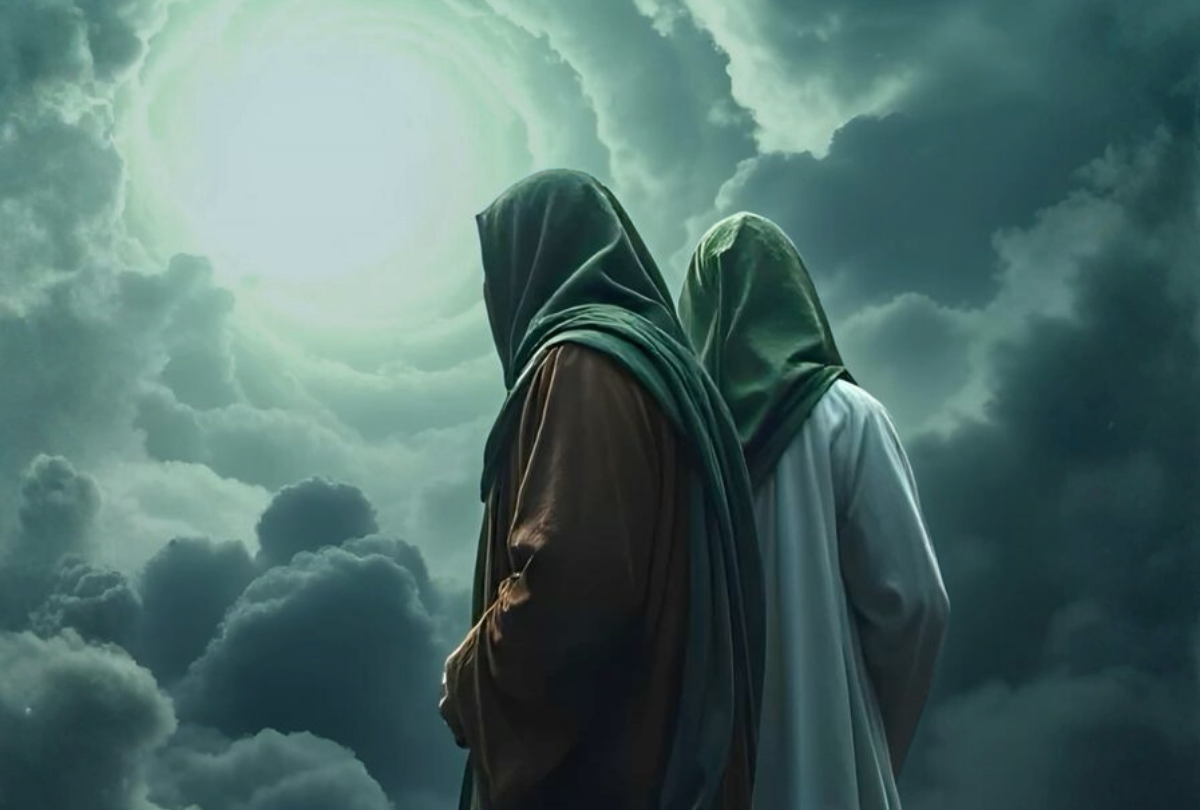
A commonly cited narration mentions that Prophet Isa (as) will pray behind Imam al-Mahdi (ajtfs).
This moment is widely interpreted as a sign of harmony, mutual recognition, and the legitimacy of Imam al-Mahdi’s (ajtfs) leadership in that era.
This portrayal highlights cooperation and shared purpose, showing how both figures contribute to a shared mission centered on justice and truth.
Key responsibilities attributed in narrations
Islamic traditions describe several key roles associated with Prophet Isa (as) during this period.
These responsibilities are often described in a way that reflects both spiritual and societal transformation.
Supporting the establishment of global justice
Prophet Isa (as) is described as actively supporting efforts to create a just and fair society, working alongside Imam al-Mahdi (ajtfs) to remove oppression and inequality.
Confronting forces of corruption and deception
He is often associated with confronting major sources of falsehood.
In many traditions, Prophet Isa (as) is described as playing a central role in defeating Dajjal, symbolizing the triumph of truth over deception.
He is also described as one of the commanders within Imam al-Mahdi’s (ajtfs) army, contributing directly to the effort to establish justice.
Clarifying truth and correcting misunderstandings
Another key role attributed to Prophet Isa (as) is clarifiying his original message.
His return is seen as an opportunity to correct misunderstandings and reaffirm the message of monotheism.
Strengthening unity among believers
His presence is also described as a unifying force, bringing people together under shared values rooted in faith, justice and faith.
What this symbolises
Beyond the literal descriptions, many scholars highlight the deeper meanings within these traditions.
The cooperation between Prophet Isa (as) and Imam al-Mahdi (ajtfs) is often seen as a symbol of unity across different eras of divine guidance.
It reflects the idea that truth is consistent, and that divine guidance operates in harmony rather than conflict.
The themes of justice overcoming oppression and clarity replacing confusion are central to these interpretations.
These narratives encourage thoughtful reflection on the enduring nature of truth and the ultimate triumph of justice.
Shared hope across the Muslim world
Belief in the return of Prophet Isa (as) and the coming of Imam al-Mahdi (ajtfs) exists in different forms across different Muslim traditions.
While details may vary, the core themes remain widely shared.
These include hope for a better future, the restoration of justice, and the renewal of faith.
This shared outlook highlights a common aspiration for a world guided by truth, compassion, and fairness.
How Muslims reflect on these narrations today
Today, many Muslims reflect on these traditions not only as future events but also as sources of moral guidance.
The focus is often placed on the values they represent.
These include striving for justice, strengthening faith, and contributing positively to society.
The emphasis is on living these principles now, rather than simply waiting for change.
In this way, the traditions inspire individuals to build communities rooted in compassion, honesty, and responsibility.
Accuracy note
Details about end-times events come from various narrations across Islamic scholarship.
Interpretations differ among traditions, but the core themes, justice, faith, and moral renewal, are widely shared.
Final reflections
The role of Prophet Isa (as) in the Government of Imam al-Mahdi (ajtfs) is described in Islamic narrations as one of cooperation, unity, and shared purpose.
Together, they represent a vision of a world rebuilt through justice, truth, and faith.
While interpretations may differ, the central message remains consistent.
These traditions inspire hope and encourage a commitment to values that uplift individuals and communities alike.
FAQ
Yes, most Muslims believe that Prophet Isa (as) will return before the Day of Judgment as one of the major signs of the end times.
In Shia belief, Imam al-Mahdi (ajtfs) is the twelfth Imam and a living guide in occultation, who will reappear at a time of widespread injustice. His role is to restore the true teachings of Islam, establish global justice, and lead a divinely guided society rooted in truth, faith, and moral integrity.
Many narrations describe Prophet Isa (as) praying behind Imam al-Mahdi (ajtfs), which is often understood as a sign of unity and support.
The defeat of Dajjal is commonly understood as the triumph of truth over deception and the removal of major sources of corruption in the end times.
While the core ideas are widely shared, interpretations and details may vary across different schools of thought.
They encourage a focus on justice, faith, unity, and ethical living in everyday life.