What is Social Justice in Islam?
Social justice in Islam is not optional—it is commanded.
During Ramadan, this command becomes clearer as fasting draws our attention to suffering, inequality, and our responsibility toward others.
For Muslims, justice is inseparable from faith. The lives of the Ahlulbayt (as) show us that true belief requires action. For Muslims, social justice is not an abstract idea. It is a lived principle taught by the Prophet Muhammad (saww) and upheld by the Ahlulbayt (as), whose lives were defined by standing with the oppressed.
Justice Rooted in Faith
Islam calls believers to stand against oppression, whether social, economic, or political.
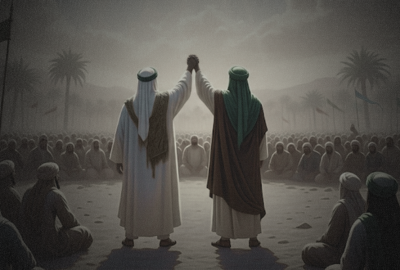
Imam Hussain (as) at Karbala stands as the ultimate symbol of resistance against injustice. Imam Ali (as) ruled with fairness, even when it came at personal cost. His example reminds us that justice must be upheld consistently, not selectively.
Ramadan as a Call to Act
Ramadan moves us beyond personal spirituality.
Hunger reminds us of the poor, while prayer renews our commitment to fairness, generosity, and service. When we feel hunger, we better understand those who live with it daily. This awareness should lead to action—through charity, advocacy, and ethical choices.
Living Social Justice Today
Supporting humanitarian causes, caring for the marginalized, and advocating for ethical treatment of all people are modern expressions of Islamic justice.
At The Zahra Trust, these values guide our work—ensuring aid is delivered with integrity and compassion.
FAQ
Yes, it is a core Islamic obligation.
Fasting builds empathy and moral awareness.
His stand at Karbala defines resistance to oppression.
Yes—Islam upholds dignity and fairness for all people.
Through ethical choices, charity, and compassion.
By serving communities with fairness, dignity, and accountability.