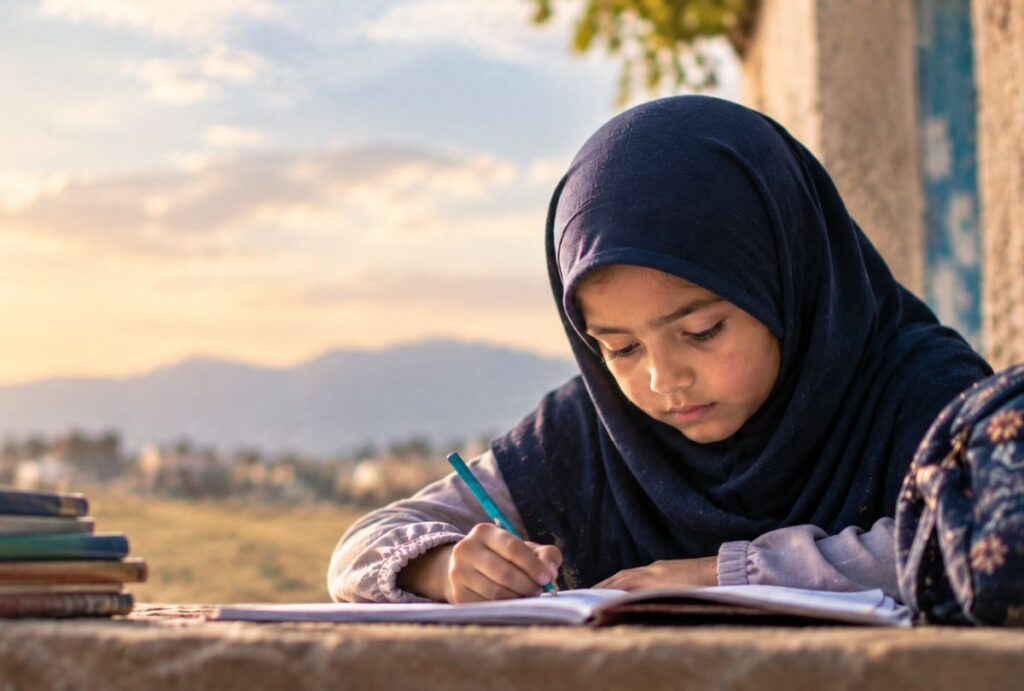
Education can open doors to opportunity, strengthen families and give communities the tools to build more secure futures. Yet millions of people around the world still lack access to quality education or the foundational literacy skills needed to benefit from it.
The global literacy crisis extends beyond children who never enroll in school. Many children spend years in classrooms without developing the ability to read and understand a simple, age-appropriate text. This is sometimes described as “learning poverty,” and it highlights a critical distinction between being in school and actually learning.
As of 2024, an estimated 754 million adults worldwide remain illiterate, and women account for approximately 63% of that number. Meanwhile, 272 million children and young people were out of school in 2023. These figures show that significant barriers to education remain, despite international efforts to improve access.
The United Nations recognizes quality education as Sustainable Development Goal 4. Reaching that goal requires more than expanding enrollment. Children need effective teaching, appropriate learning materials, safe environments and the practical support that allows them to stay in school.
Why Access to Education Matters
Access to education affects much more than academic achievement. It can shape a person’s health, earning potential, confidence and ability to participate in society.
The World Bank estimates that roughly seven in ten children in low- and middle-income countries cannot read and understand a simple text by age 10. When foundational literacy is missing, children can struggle to keep up with other subjects and may face greater challenges throughout their education.
Education also gives people the ability to understand information, make informed decisions and navigate everyday life. A child who learns to read is gaining a skill that can influence opportunities for decades to come.
Islam places a similarly strong emphasis on knowledge:
Education, therefore, can be understood not simply as a route to a career, but as an opportunity for individuals to grow, contribute and use their abilities for the benefit of others.
Education Can Help Break the Cycle of Poverty
Poverty and limited educational access can reinforce one another. Families with very limited resources may struggle to afford the costs associated with sending a child to school, while children who receive little education may have fewer opportunities to secure stable employment as adults.
Research shows that each additional year of schooling is associated with approximately a 9% increase in hourly earnings globally. At a broader level, expanding access to secondary education could help lift hundreds of millions of people out of poverty.
Literacy is a particularly important foundation. Being able to read and understand information can help people apply for jobs, manage finances, understand legal documents and make use of essential public services.
For communities, investment in education can create benefits that continue across generations. A child who receives a quality education may have greater opportunities as an adult and be better positioned to support the education and wellbeing of their own children.
This is why removing barriers to education is also an important part of addressing poverty.
Literacy, Health and Family Wellbeing
The relationship between education and health is another reason access matters.
People with stronger literacy skills are better positioned to understand health information, follow medical guidance and make informed decisions about nutrition, hygiene and preventative care. The effects can be particularly significant for women and mothers.
Education can also help women make informed decisions about family planning and healthcare while supporting the well-being and education of their children. These benefits demonstrate how improving educational opportunities for one person can have a wider effect on an entire family.
When education and basic needs are addressed together, children are better positioned to learn and families can become more resilient.
Education and Equality for Girls and Women
Girls and women continue to experience significant barriers to education in many parts of the world.
Women make up approximately 63% of adults who are unable to read and write globally. Addressing this disparity is essential to creating more equal societies and ensuring that girls have the same opportunity to develop their potential.
Education can give girls greater access to knowledge about health, rights and economic opportunities. It can also strengthen their ability to participate in decisions within their families and communities.
According to the United Nations, education plays an important role in advancing gender equality. Greater educational access is associated with reductions in early marriage and teenage pregnancy and can increase women’s participation in social, economic and political life.
Educating girls can consequently produce benefits that extend well beyond the individual. When women have greater access to knowledge and opportunity, families and communities can become healthier and more economically secure.
Education, Peace and Stronger Communities
Education can also contribute to peaceful, connected and resilient communities.
Quality learning encourages critical thinking, civic participation and an understanding of different perspectives. It can help people challenge misinformation, engage constructively with others and participate in decisions that affect their communities.
These qualities are particularly important in places affected by conflict or displacement. When children are forced from their homes, education is often one of the first parts of everyday life to be disrupted.
Maintaining access to education during a crisis can provide children with structure and a sense of normalcy while helping protect their long-term prospects. Without that continuity, children may face increasing learning gaps and fewer opportunities as they grow older.
For children living through conflict, displacement or other emergencies, education can offer more than academic instruction. It can provide hope and a connection to a future beyond the immediate crisis.
Removing the Barriers to Learning
The global literacy crisis has many interconnected causes. Poverty, conflict, displacement, inadequate resources, teacher shortages and ineffective instruction can all limit a child’s ability to learn.
For some families, the barriers are immediate and practical. The cost of school fees, a uniform, a backpack or daily food can make attending school more difficult. A child may want to learn but still be held back by circumstances beyond their control.
That is why practical educational support matters.
A backpack and school supplies can help a child arrive prepared for the classroom. A school uniform can help them attend with dignity and a sense of belonging. Assistance with school fees can help keep education within reach, while food aid can address hunger that might otherwise make it difficult for a child to concentrate and learn.
Removing these barriers is about more than providing individual items. It is about helping children access an opportunity that can influence the rest of their lives.
Learning Through the Example of the Ahlulbayt (as)
The importance of seeking knowledge is deeply rooted in Islamic teachings. Knowledge can strengthen a person’s understanding, character and ability to fulfill their responsibilities toward Allah (swt) and those around them.
Prophet Muhammad (saww) is reported to have said,
“Seeking knowledge is an obligation on every Muslim. Indeed how Allah (swt) loves those who strive in
their quest for knowledge.” (al-Kafi, v.1, p.30, n.1)
This teaching highlights the value Islam places on learning. Supporting access to education can therefore be seen as an investment in people’s ability to seek knowledge, develop their potential and contribute positively to their communities.
For children facing poverty or humanitarian crises, making learning accessible can help protect an opportunity that should not be determined by the circumstances into which they were born.
How Can We Help Address the Global Literacy Crisis?
Addressing the global literacy crisis requires action at multiple levels. Governments and education systems need to invest in effective teaching, teacher training, learning materials and safe schools. Communities and humanitarian organizations can help respond to the practical challenges that prevent vulnerable children from accessing education.
Foundational literacy deserves particular attention because reading and comprehension skills form the basis for learning across subjects. Children who fall behind in the early years can find it increasingly difficult to catch up.
Practical support can also make a difference. Helping families with education-related costs and basic needs can reduce some of the pressures that keep children out of school or make learning more difficult.
Through support for back-to-school essentials, school fees and child food aid, organizations such as The Zahra Trust can help address some of these immediate barriers.
Every Future Begins with a Chance to Learn
The scale of the global literacy crisis can seem daunting, but statistics represent real children, families and communities. Behind every number is someone whose opportunities may be shaped by whether they can access education.
A child should not have to choose between learning and having their basic needs met. A missing school uniform, an unaffordable fee, a lack of supplies or an empty stomach should not determine whether a child gets the chance to learn.
Removing these barriers can help children approach school with confidence and dignity. More importantly, it can give them a foundation from which they can pursue future opportunities.
Through your support, The Zahra Trust can help remove barriers to learning by supporting essentials such as school supplies, school fees and child food aid.
Every child deserves a chance to learn. Help remove the barriers that stand between a child and their education, and give them the opportunity to begin their school year with dignity and hope.
Frequently Asked Questions
What is the global literacy crisis?
The global literacy crisis describes the large number of children and adults who do not have basic reading and writing skills. It includes people who have been unable to access education as well as children who attend school but do not develop foundational literacy.
Why is access to education important?
Access to education provides people with knowledge and skills that can influence their employment, health, financial security and participation in society. Quality education can also help communities reduce inequality and create greater opportunities for future generations.
How does literacy help reduce poverty?
Literacy helps people understand information, pursue employment, manage finances and access essential services. Education is also linked to increased earning potential, making it an important tool for helping individuals and communities move beyond persistent poverty.
Why are girls’ education and women’s literacy important?
Educating girls can improve outcomes for women, children and entire communities. It can increase access to health and economic information, support women’s participation in decision-making and help address inequalities that limit opportunities for girls and women.
What are the main barriers to education?
Common barriers include poverty, conflict, displacement, rural isolation, inadequate school resources and interruptions to education. Families experiencing financial hardship may also struggle to afford school fees, uniforms, supplies and food.
How can I help children access education?
You can support The Zahra Trust as it works to remove the practical and financial barriers vulnerable children face. Donations toward school essentials, school fees and child food aid can help children attend school and have the support they need to learn with dignity and confidence.
More from Blog

Imam Hasan al-Askari (as): Preparing the next generation
The Wiladat of Imam Hasan al-Askari (as) offers believers an opportunity to reflect on the life of the eleventh Imam of the…
Knowledge as Sadaqah Jariyah: Why supporting education is a lasting legacy
Every believer hopes to leave behind a legacy that continues to earn the pleasure of Allah (swt). While many acts of charity…
Why school meals matter more than you think
For many children, school represents more than a classroom. It is a place of safety, opportunity, and hope. For millions of children…